O património ainda será de Ferro?
Jun 28, 2018 | Capítulos, Publicações

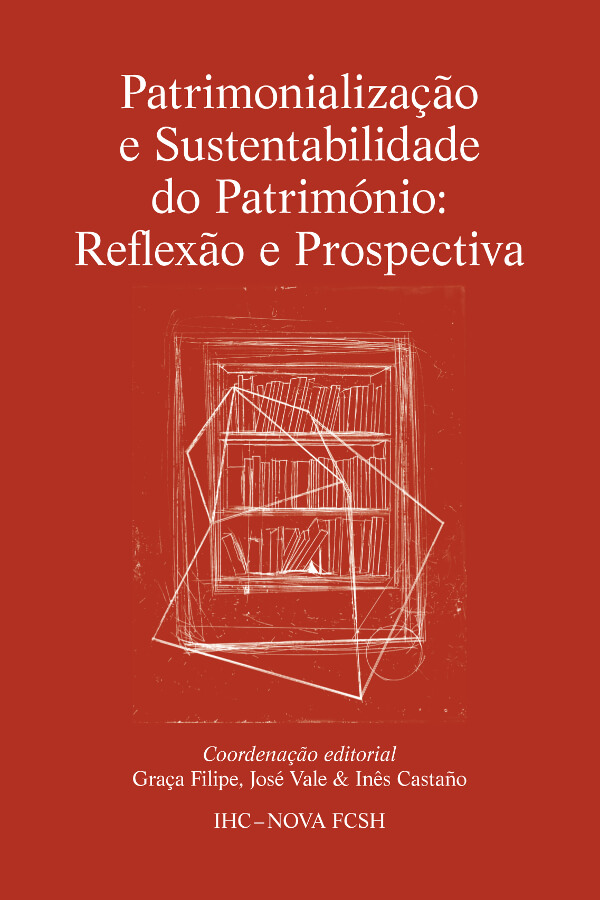
O património ainda será de Ferro? Um olhar sobre a patrimonialização no Estado Novo e no globalizado século XXI
- Cândida Cadavez
- Patrimonialização e Sustentabilidade do Património: Reflexão e Prospectiva [Documento electrónico]
- Graça Filipe, José Vale & Inês Castaño (Coords.)
- 2018
- Lisboa: Instituto de História Contemporânea da Universidade NOVA de Lisboa
- Idioma: Português
- ISBN: 978-989-98388-4-0
- Páginas: 67-78
Segundo David Lowenthal, o património ajuda a evocar identidades e a situar memórias, atraindo públicos e promovendo aspetos da rotina social, sempre com o propósito de especificar comunidades (vd. Lowenthal, 1996: 45). Por isso, todos os grandes poderes fazem gala em exibi-lo e celebrar o seu alegado caráter único (vd. ibidem: 41, 47).
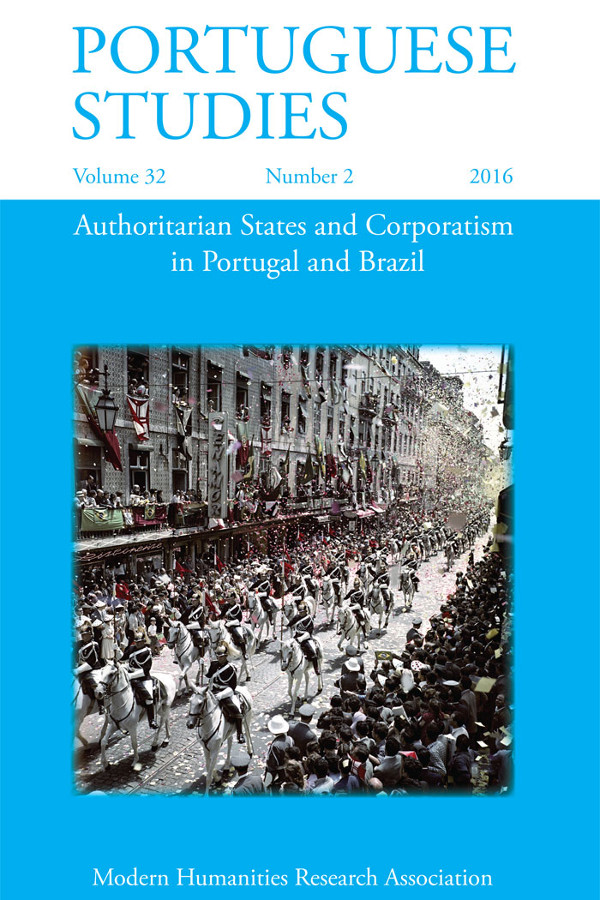
Este artigo pretende identificar a voz e o ensinamento dos poderes que agenciam a orgânica da patrimonialização em ambientes concretos. Assim, evoca-se a pertinência do património nos primeiros anos do regime de Salazar e o modo como veiculou lições ideológicas, nomeadamente em práticas a priori meramente turísticas, algumas encenadas pelo principal arquiteto da imagem da “Nação” nos primórdios do regime, António Ferro. Pretende-se, também, compreender se, no início do século XXI, o “património” sistematizado pela propaganda do Estado Novo ainda povoa o imaginário coletivo nacional.
Num momento em que as inevitabilidades da globalização dividem públicos entre os que as vêem como um aniquilador de identidades, e os outros que as entendem como um impulsionador para a preservação identitária, urge igualmente averiguar o entendimento que é feito de “património” e as reais motivações para que a patrimonialização e a conservação patrimonial sejam rótulos recorrentes de discursos contemporâneos.
Palavras-chave:
Património, turismo, António Ferro, poder, globalização
Outras Publicações
Pesquisa
Agenda
fevereiro, 2026
Tipologia do Evento:
Todos
Todos
Apresentação
Ciclo
Colóquio
Conferência
Congresso
Curso
Debate
Encontro
Exposição
Inauguração
Jornadas
Lançamento
Mesa-redonda
Mostra
Open calls
Outros
Palestra
Roteiro
Seminário
Sessão de cinema
Simpósio
Workshop
- Event Name
seg
ter
qua
qui
sex
sab
dom
-
-
-
-
-
-
1
2
3
4
5
6
7
8
9
10
11
12
13
14
15
16
17
18
19
20
21
22
23
24
25
26
27
28

Detalhes do Evento
Conferência que tem como objectivo abrir espaço para o diálogo sobre como as Humanidades Digitais podem impulsionar abordagens plurais da história, da memória, do património e da criatividade.
Ver mais
Detalhes do Evento
Conferência que tem como objectivo abrir espaço para o diálogo sobre como as Humanidades Digitais podem impulsionar abordagens plurais da história, da memória, do património e da criatividade.
Crossing Oceans: Digital Humanities in Dialogue
We are pleased to announce the international conference Crossing Oceans: Digital Humanities in Dialogue, bringing together researchers, practitioners, and digital humanists from all around the globe. This event seeks to create a space of truly transoceanic dialogue to discuss the present and future of Digital Humanities.
The conference invites participants to rethink methodologies for work in the Humanities at a time when digital transformations are reshaping how we investigate, interpret, and share knowledge. The digitization of archival materials, alongside the proliferation of born-digital records, has multiplied the sources available for historical, literary, and cultural analysis. Today, researchers have at their disposal a wide range of digital tools and software that allow them to organise, interpret, manipulate, share, and store data in increasingly diverse ways, opening new pathways for both collaborative and innovative research. At the same time, the emergence of artificial intelligence challenges us to critically assess both the possibilities and the risks of automated tools in the construction of knowledge.
Programme highlights
26 February
08:30 GMT – Registration and welcome coffee
08:45 GMT – Opening
09:00–10:30 GMT – Digital archives and collections
10:30–12:00 GMT – Digital heritage
13:00–15:00 GMT – Round-table
15:00–15:30 GMT – Coffee break
15:30–17:00 GMT – Digital approaches to colonialism
17:00–18:30 GMT – Databases and archives
27 February
08:30 GMT – Welcome coffee
09:00–10:30 GMT – Artificial Intelligence
10:30–12:00 GMT – Databases
113:00–15:00 GMT – Round-table
15:00–15:30 – Coffee break
15:30–17:00 GMT – Infrastructures and methods
17:00–18:30 GMT – Artificial Intelligence
Call for papers
By crossing oceans and perspectives, this conference aims to open the space for dialogue on how Digital Humanities can boost plural approaches to history, memory, heritage, and creativity, while also confronting questions of accessibility, ethics, and epistemic justice, as when we use these tools to give voice to new agents previously made invisible by traditional historiography, for instance.
On this conference, we welcome contributions on topics including but not limited to:
- Methodological innovations in Digital Humanities research.
- The impact of AI on the Humanities and critical approaches to its use.
- Digitization projects and the challenges of working with born-digital materials.
- Digital strategies for reaching non-academic audiences.
- Tools and projects that facilitate collaborative and transnational projects.
Submission period: 20 October – 5 December 2025 26 January 2026 [new deadline]
Participation: Free of charge, registration required
Language: English (presentations in other languages may be considered)
🔗 Registration and proposal submission
Organisation
Organising Committee
Anderson Antunes (University of Évora / IHC / IN2PAST)
Sara Albuquerque (University of Évora / IHC / IN2PAST)
Scientific Committee
Ana Margarida Dias da Silva (University of Coimbra / CHSC / DCV-UC)
Anderson Antunes (University of Évora / IHC / IN2PAST)
Daniel Alves (IHC — NOVA FCSH / IN2PAST)
Santiago Perez (CEComp — FLUL)
Sara Albuquerque (University of Évora / IHC / IN2PAST)
Silvia Valencich Frota (CEComp — FLUL)
Executive Committee
Anderson Antunes (University of Évora / IHC / IN2PAST)
Diana Barbosa (IHC — NOVA FCSH / IN2PAST)
Sara Albuquerque (University of Évora / IHC / IN2PAST)
Paula Gentil Santos (University of Évora)
This conference is inspired by the KNOW.AFRICA project (https://doi.org/10.54499/2022.01599.PTDC), which investigates nineteenth-century Portuguese scientific expeditions in Angola by highlighting the invisible contributions of local agents who made travelling and collecting possible. In this project, we analyse how cooks, guides, interpreters, porters, local rulers, and others, collaborated with the construction of knowledge and the formation of scientific collections. Through the use of Digital Humanities methods and tools – such as GIS mapping, network analysis and visualisation, databases, and interactive digital timelines – KNOW.AFRICA aims to explore how digital tools can assist in the construction and dissemination of historical knowledge. By combining archival research with digital tools, the project not only advances academic debates on colonial science but also develops outputs aimed at wider publics, including digital exhibitions, podcasts, and interactive maps and timelines. In this way, KNOW.AFRICA aims to use the Digital Humanities as a way to bridge research and dissemination, turning historical inquiry into a shared, multidisciplinary and collaborative process.
Tempo
26 (Quinta-feira) 8:30 am - 27 (Sexta-feira) 6:30 pm
Organizador
Instituto de História Contemporânea — Universidade de Évoracehfc@uevora.pt Largo dos Colegiais, 2 — 7000-812 Évora
Notícias
VINCULUM — Um fim e um novo começo
Fev 24, 2026
A FCSH acolheu a a sessão de encerramento do projecto VINCULUM
Em Março, Lisboa é a Capital da Intriga Internacional
Fev 21, 2026
Entre 2 e 31 de Março, na Cinemateca Portuguesa
Anita Buhin está em missão de investigação em Itália
Fev 20, 2026
É Investigadora Visitante no CAST da Universidade de Bolonha