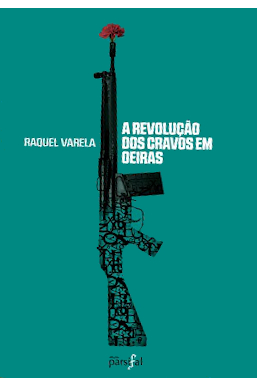
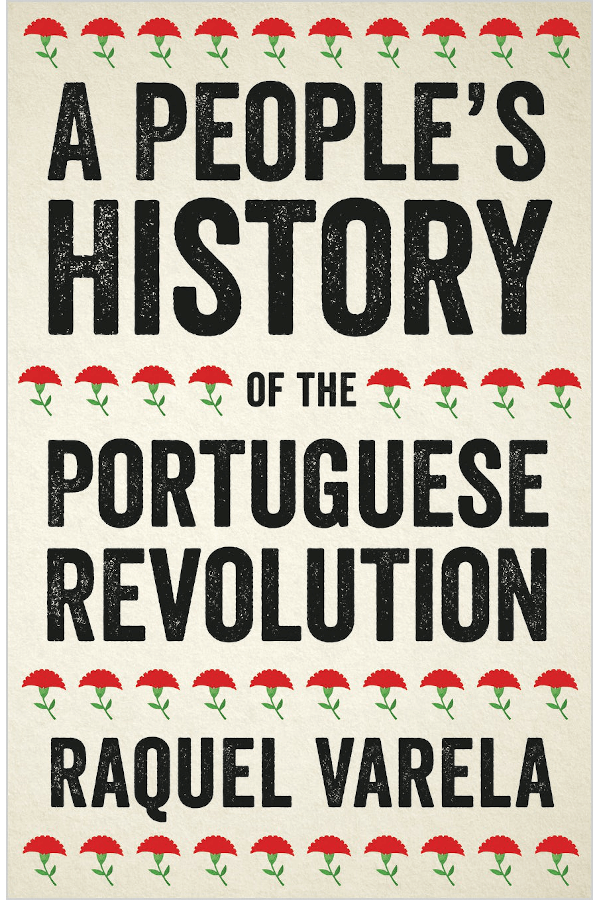
A Revolução dos Cravos em Oeiras
Abr 27, 2019 | Livros, Publicações

A Revolução dos Cravos em Oeiras
- Raquel Varela
- 2019
- Lisboa: Edições Parsifal
- Idioma: Português
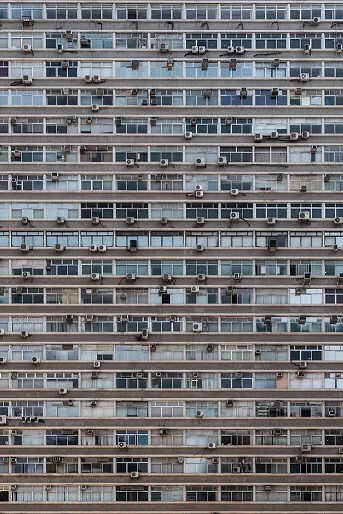
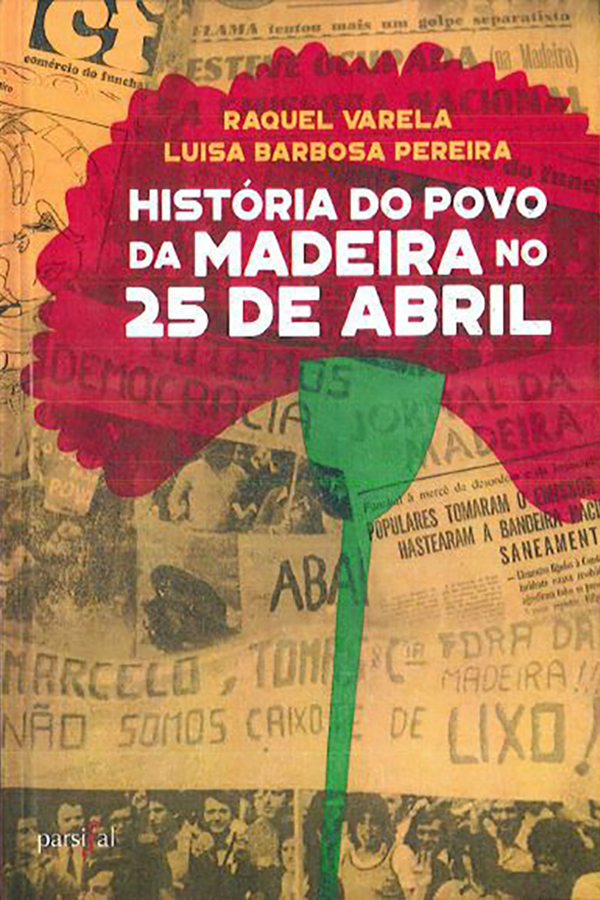
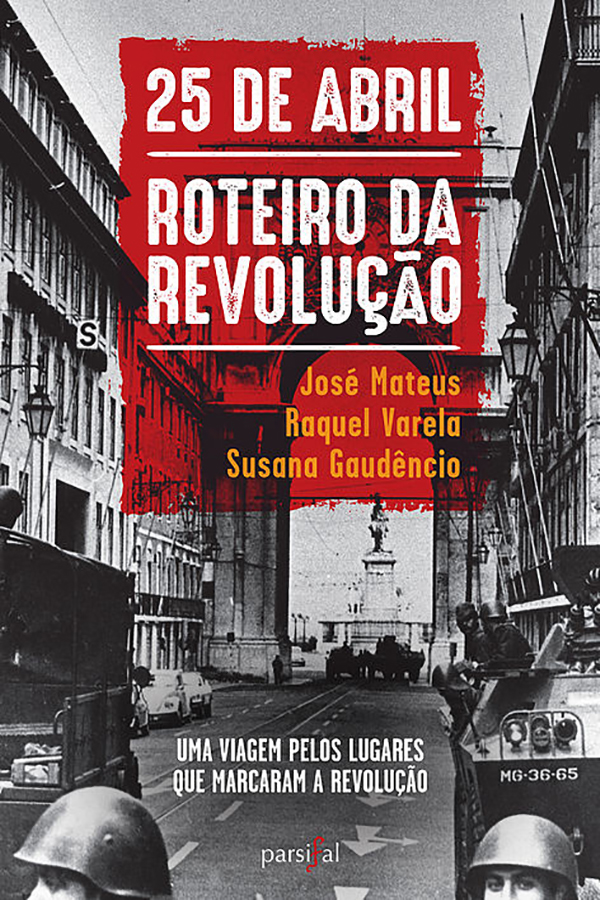
Roteiro narrativo aos locais mais emblemáticos do concelho de Oeiras que reflete a história do 25 de Abril e dos anos que se seguiram centrados na importância dos direitos democráticos e construção do Estado Social e o 25 de Abril como fator de identidade nacional. Este itinerário constitui um guia inovador que orienta o leitor pelos principais lugares históricos de Oeiras.
Outras Publicações
Pesquisa
Agenda
setembro, 2026
Tipologia do Evento:
Todos
Todos
Apresentação
Ciclo
Colóquio
Conferência
Congresso
Curso
Debate
Encontro
Exposição
Inauguração
Jornadas
Lançamento
Mesa-redonda
Mostra
Open calls
Outros
Palestra
Roteiro
Seminário
Sessão de cinema
Simpósio
Workshop
- Event Name
seg
ter
qua
qui
sex
sab
dom
-
1
2
3
4
5
6
7
8
9
10
11
12
13
14
15
16
17
18
19
20
21
22
23
24
25
26
27
28
29
30

Detalhes do Evento
Conferência que procura desafiar o revisionismo histórico, amplificar vozes marginalizadas e promover diálogos transnacionais sobre reconciliação, responsabilização e justiça restaurativa. The Public History of Difficult Pasts 8th
Ver mais
Detalhes do Evento
Conferência que procura desafiar o revisionismo histórico, amplificar vozes marginalizadas e promover diálogos transnacionais sobre reconciliação, responsabilização e justiça restaurativa.
The Public History of Difficult Pasts
8th International Conference on Public History
IFPH 2026
The 8th International Conference on Public History, organised by the International Federation for Public History, IFPH, will take place in Lisbon from September 7 to 11, 2026. It will be hosted by IN2PAST – the Associate Laboratory for Research and Innovation in Heritage, Arts, Sustainability and Territory, a transdisciplinary consortium of seven research centres, at the Almada Negreiros College on the Campolide Campus of NOVA University Lisbon.
In a time of escalating attacks by right-wing movements on memory, diversity, human rights, democracy, and history itself, the IFPH reaffirms its commitment to fostering critical engagement with the ways societies confront, interpret, and relate to their difficult pasts and challenging presents. The IFPH strongly condemns book banning, the censorship of historical narratives, the surveillance of students and educators, the targeting of sites of remembrance, and the imposition of ideological agendas — particularly right-wing distortions — that not only threaten academic freedom but undermine the very principles upon which public history is built. Against this backdrop, the conference seeks to challenge historical revisionism and silencing, to amplify marginalised voices and memories, and to promote transnational dialogues on reconciliation, accountability, and restorative justice.
Public History has long addressed global historical processes such as colonialism, the transatlantic slave trade, and the genocide of Indigenous peoples, as well as phenomena that emerge in multiple contexts, including armed conflicts and dictatorships. It embodies both a political and ethical commitment to examining how difficult pasts have been lived and remembered by different communities and individuals, ensuring that their perspectives are acknowledged and respected. At the same time, engaging with these histories through Public History raises significant challenges. Sharing authority with specific communities and amplifying marginalised narratives may unintentionally silence other voices, while also presenting complex ethical dilemmas. Furthermore, Public History operates within the public sphere, engaging diverse audiences and navigating competing representations of the past in an era increasingly marked by the political instrumentalisation of history and the spread of revisionist and denialist discourses.
🔗 Free registration HERE.
Call for contributions
This conference seeks to challenge historical revisionism, amplify marginalised voices, and foster transnational dialogues on reconciliation, accountability, and restorative justice. We invite contributions that explore:
Historical Contexts and Global Processes
-
- Colonialism and its enduring legacies
- The transatlantic slave trade and its commemorations
- Indigenous genocide and cultural destruction
- Armed conflicts, civil wars, and their aftermath
- Dictatorships, authoritarianism, and state violence
- Mass atrocities and crimes against humanity
Contemporary Challenges and Methodological Innovations
-
- Countering historical denial and revisionism
- Navigating contested memories and competing narratives
- Sharing authority with affected communities
- Ethical dilemmas in representing traumatic pasts
- Digital humanities, media, and social networks
- Museum practices and memorial sites
- Archives, and archival activism
- Educational approaches to sensitive histories
Voices and Perspectives
-
- Survivor testimonies and intergenerational trauma
- Community-based historical projects
- Oral history and marginalised narratives
- Gender, sexuality, and intersectional approaches
- Youth engagement with difficult pasts
- Transnational and comparative perspectives
Justice and Reconciliation
-
- Truth commissions and transitional justice
- Reparations and historical redress
- Memorialisation and commemoration practices
- Restorative justice approaches
- Healing and collective memory
- Building inclusive historical narratives
Calendar
Opening of the Call for Presentations: 30 September 2025
Deadline for Application: 30 November 7 December 2025 [new deadline]
Deadline for reviewers to do their reviews: 31 January 2026
Call for posters: January 2026
Results of the Call for Presentations will be announced by March 2026
Programme of the conference shall be available around June 2026
Deadline for registration for on-site attendance: August 2026
Conference: 7-11 September 2026
Submission of proposals
🔗 Submit your panel proposal HERE.
🔗 Submit your paper proposal HERE.
🔗 Submit your Working Group proposal HERE.
>> Download the call for papers (PDF) <<
Tempo
7 (Segunda-feira) 11:00 am - 11 (Sexta-feira) 6:00 pm
Organizador
Várias instituições

Detalhes do Evento
O Grupo de Leitura RESONANCE é um encontro mensal da comunidade académica mais ampla do projeto RESONANCE, dedicado à reflexão sobre um texto ou livro importantes. RESONANCE Reading Group
Ver mais
Detalhes do Evento
O Grupo de Leitura RESONANCE é um encontro mensal da comunidade académica mais ampla do projeto RESONANCE, dedicado à reflexão sobre um texto ou livro importantes.
RESONANCE Reading Group
Session #6: Images of Class: Operaismo, Autonomia and the Visual Arts (1962-1988), by Jacopo Galimberti
The RESONANCE Reading Group is a monthly meeting that brings together members of the academic community, colleagues, friends, and enthusiasts of contemporary cultural history to reflect on and discuss a fundamental text or book. It is part of the project RESONANCE — Epistemologies for the Documentation of Affect and Becoming in Cultural Manifestations in Performance (1969-1979). This group meets in person at NOVA FCSH or online, during lunchtime on a weekday. Each participant brings their own lunch, and for in-person sessions, coffee and biscuits are kindly provided by the project.
The sixth session of the RESONANCE Reading Group focuses on Chapter 7 of the book Images of Class: Operaismo, Autonomia and the Visual Arts (1962-1988). The chapter – Art against Housework: The Gruppo Immagine and the Wages for Housework Campaign – brings together discussions on social reproduction vis-à-vis informal networks of solidarity across feminist art practice ecologies in the 1970s. This is a key text to explore the infrastructural dynamics of these movements with a close reading of artistic production at the crux of the Operaismo and Autonomia movements. This reading group is going to be led by Hélia Marçal (IHA, NOVA FCSH / IN2PAST) and will count with the author’s participation.
You can hear Jacopo presenting the book here, and in an e-flux podcast episode with Andreas Petrossiants here. This event will be conducted in English but we will do our best to facilitate translation into English if needed.
This session integrates RESONANCE’s Autumn Seminar, which also includes the RESONANCE Autumn Lecture, which will be delivered by Jacopo Galimberti. Galimberti will present his latest research at the Salão Nobre of the NOVA School of Social Sciences and Humanities, on September 9 at 18.00. The session – titled Hopeful Monsters: Operaismo, Autonomia, and the Reconfiguration of Revolutionary Subjectivity – seeks to trace the representation of revolutionary subjectivity, focusing on the figure of the monster as depicted in Italy in the 1960s and 1970s.
You can register for the Reading Group by emailing the RESONANCE project team at resonance.fcsh.unl@gmail.com and to receive a PDF copy of the chapter.
More information about the RESONANCE project here.
The RESONANCE project is supported by the Programa Regional Lisboa 2030, Portugal 2030 and the European Union (LISBOA2030-FEDER-00914500). This work is also co-funded by national funds through FCT – Fundação para a Ciência e a Tecnologia, I.P., under the reference 2023.17624.ICDT (DOI: https://doi.org/10.54499/2023.17624.ICDT).
Tempo
(Quarta-feira) 12:00 pm - 1:30 pm
Localização
NOVA FCSH, Colégio Almada Negreiros, Sala SD
Campus de Campolide da NOVA — 1099-085 Lisboa
Organizador
Instituto de História Contemporânea, IHA, CESEM, ICNOVA e IFILNOVA — NOVA FCSH

Detalhes do Evento
RESONANCE Autumn Seminar, with Jacopo Galimberti, that seeks to trace the representation of revolutionary subjectivity, focusing on the figure of the monster as depicted in Italy in the 1960s and
Ver mais
Detalhes do Evento
RESONANCE Autumn Seminar, with Jacopo Galimberti, that seeks to trace the representation of revolutionary subjectivity, focusing on the figure of the monster as depicted in Italy in the 1960s and 1970s.
Hopeful Monsters:
Operaismo, Autonomia, and the Reconfiguration of Revolutionary Subjectivity
Jacopo Galimberti (Università Iuav di Venezia)
In the context of the RESONANCE project and the IHA’s Permanent Seminar, Jacopo Galimberti will deliver a seminar featuring his latest research at the Salão Nobre of the NOVA School of Social Sciences and Humanities, on September 9 at 18.00. The session – titled Hopeful Monsters: Operaismo, Autonomia, and the Reconfiguration of Revolutionary Subjectivity – seeks to trace the representation of revolutionary subjectivity, focusing on the figure of the monster as depicted in Italy in the 1960s and 1970s. Galimberti will explore these hopeful monsters as a visual reflection on the political taxonomies of the twentieth century, tracing, in the process, the characteristics of a revolutionary subjectivity. This author’s approach relates to the RESONANCE project’s research on revolutionary intersubjectivity and its materialisations across timescapes.
The talk will be delivered in English.
This session integrates RESONANCE’s Autumn Seminar, which also includes the RESONANCE Reading Group, which will take place on September 9 at noon, and will count with Galimberti’s participation. The RESONANCE Reading Group is a monthly meeting that brings together members of the academic community, colleagues, friends, and enthusiasts of contemporary cultural history to reflect on and discuss a fundamental text or book. The sixth session of the RESONANCE Reading Group focuses on Chapter 7 of the book Images of Class: Operaismo, Autonomia and the Visual Arts (1962-1988).
More information about the RESONANCE project here.
The RESONANCE project is supported by the Programa Regional Lisboa 2030, Portugal 2030 and the European Union (LISBOA2030-FEDER-00914500). This work is also co-funded by national funds through FCT – Fundação para a Ciência e a Tecnologia, I.P., under the reference 2023.17624.ICDT (DOI: https://doi.org/10.54499/2023.17624.ICDT).
Tempo
(Quarta-feira) 6:00 pm - 8:00 pm
Localização
NOVA FCSH, Colégio Almada Negreiros, Salão Nobre
Campus de Campolide da NOVA — 1099-085 Lisboa
Organizador
Instituto de História Contemporânea, IHA, CESEM, ICNOVA e IFILNOVA — NOVA FCSH
Notícias
Lisboa acolhe a 8ª Conferência Internacional de História Pública
Ago 31, 2026
Sob o tema “A História Pública de Passados Difíceis”
Quinta edição do Prémio Amílcar Cabral
Jul 27, 2026
Candidaturas abertas até 30 de Setembro
Marta Pinto Machado em dose dupla em Lisboa: MNAC e CCCV
Mai 14, 2026
A exposição “Ceci n’est Pas Francisco” está patente no MNAC e vai-se estender ao CCCV