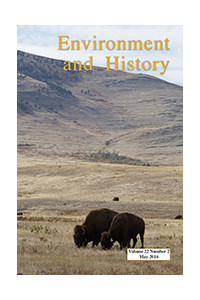
Birds in Portuguese Literature
Mai 1, 2016 | Artigos, Publicações

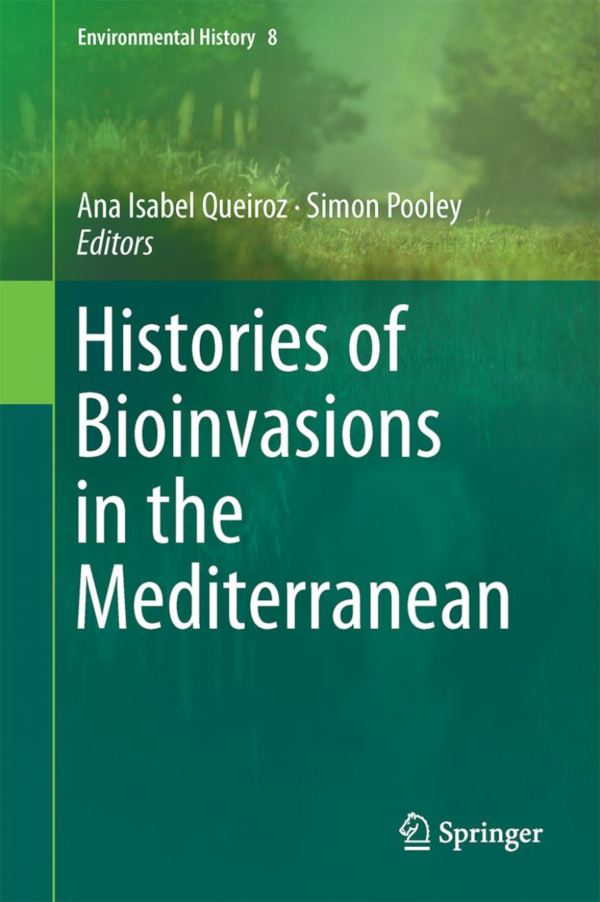
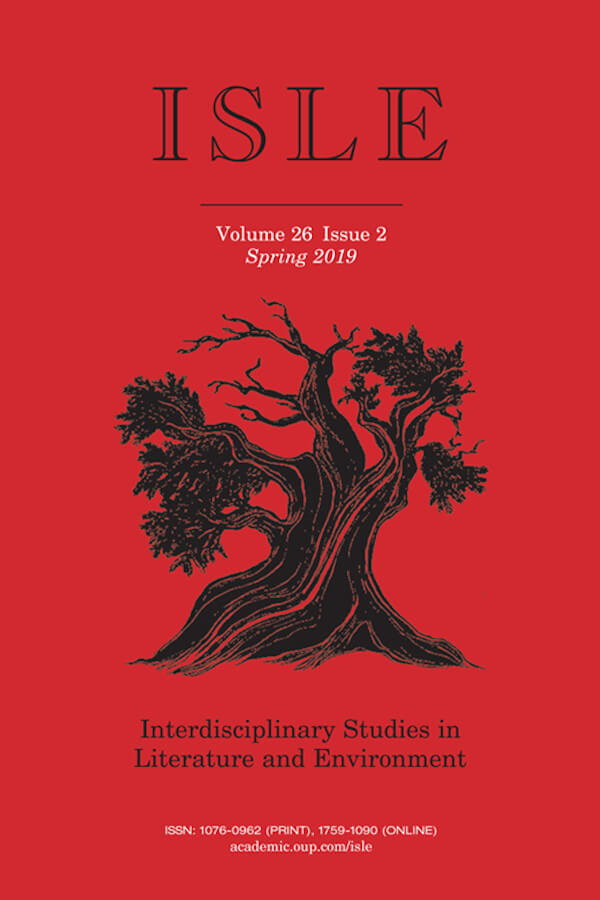
Birds in Portuguese Literature
- Ana Isabel Queiroz & Filipa Soares
- 2016
- Environment and History
- Volume 22, Número 2
- 228-254
- Idioma: Inglês
- DOI: 10.3197/096734016X14574329314362
- ISSN: 0967-3407 / 1752-7023 (online)
Birds are emblematic natural elements of landscapes. Readily noticeable and appreciated due to their songs and flight, they have been thoroughly used as components of literary scenarios. This paper analyses their representations in a broad corpus (144 writings by 67 writers) since the nineteenth century, divided in three time-periods. It aims to understand which wild birds are represented in Portuguese literature, how those representations prevail over time, and what literary texts reveal about distribution and abundance of the birds mentioned, linked to major environmental and landscape changes. Based on common names, 112 taxonomic units are identified, corresponding to either one species, species of the same genera or family or a higher taxon. In addition, historical distribution and abundance are extracted from literary texts and compared with data from biological sources, such as ornithological reports, guides, atlas and red data books. We conclude that bird representations are frequent and diversified in terms of taxonomic units, and this richness tends to prevail over time. The most prolific wild bird representations are linked to the writers’ own experiences of the Portuguese countryside during their childhood and youth. It is particularly significant in the writers from the nineteenth century and the first half of the twentieth century, with a rural origin, like most of the population. Despite landscape and social changes through time, contemporary literature still reveals a sound knowledge of birds and a proximity and appreciation of nature, which can be explained by the rural ancestry of some current writers, as a kind of countryside nostalgia, and/or the embodiment of an environmental discourse of wildlife preservation.
Palavras-chave:
Ecological history; Portuguese literature; birds
Outras Publicações
Pesquisa
Agenda
março, 2026
Tipologia do Evento:
Todos
Todos
Apresentação
Ciclo
Colóquio
Conferência
Congresso
Curso
Debate
Encontro
Exposição
Inauguração
Jornadas
Lançamento
Mesa-redonda
Mostra
Open calls
Outros
Palestra
Roteiro
Seminário
Sessão de cinema
Simpósio
Workshop
- Event Name
seg
ter
qua
qui
sex
sab
dom
-
-
-
-
-
-
1
2
3
4
5
6
7
8
9
10
11
12
13
14
15
16
17
18
19
20
21
22
23
24
25
26
27
28
29
30
31

Detalhes do Evento
O Grupo de Leitura RESONANCE é um encontro mensal da comunidade académica mais ampla do projeto RESONANCE, dedicado à reflexão sobre um texto ou livro importantes. RESONANCE Reading Group
Ver mais
Detalhes do Evento
O Grupo de Leitura RESONANCE é um encontro mensal da comunidade académica mais ampla do projeto RESONANCE, dedicado à reflexão sobre um texto ou livro importantes.
RESONANCE Reading Group
Session #3: Resonance: A Sociology of Our Relationship to the World, by Hartmut Rosa
The RESONANCE Reading Group is a monthly meeting that brings together members of the academic community, colleagues, friends, and enthusiasts of contemporary cultural history to reflect on and discuss a fundamental text or book. It is part of the project RESONANCE — Epistemologies for the Documentation of Affect and Becoming in Cultural Manifestations in Performance (1969-1979). This group meets in person at NOVA FCSH or online, during lunchtime on a weekday. Each participant brings their own lunch, and for in-person sessions, coffee and biscuits are kindly provided by the project.
The second session of the RESONANCE Reading Group focuses on Chapter 5 of the book Resonance: A Sociology of Our Relationship to the World, by Hartmut Rosa (English translation). The chapter – “Resonance and Alienation as Basic Categories of a Theory of Our Relationship to the World” – explores two social effects of Rosa’s approach to a material-discursive (radical) relationality that is inherently affective. This is a crucial text to explore the material relationality of bodies, space, and the vibrations of modernity as both a historical category and a pernicious, insidious, infrastructure impacting our living in the world. This reading group is going to be led by Hélia Marçal (IHA — NOVA FCSH / IN2PAST).
You can register by emailing Hélia Marçal at heliamarcal@fcsh.unl.pt, to receive an online meeting link and a PDF copy of the chapter.
More information about the RESONANCE project here.
Picture: Guava, axial view, MRI. Alexandr Khrapichev, University of Oxford. Source: Wellcome Collection, United Kingdom (CC BY)
The RESONANCE project is supported by the Programa Regional Lisboa 2030, Portugal 2030 and the European Union (LISBOA2030-FEDER-00914500). This work is also co-funded by national funds through FCT – Fundação para a Ciência e a Tecnologia, I.P., under the reference 2023.17624.ICDT (DOI: https://doi.org/10.54499/2023.17624.ICDT).
Tempo
(Segunda-feira) 12:30 pm - 2:00 pm
Organizador
Instituto de História Contemporânea, IHA, CESEM, ICNOVA e IFILNOVA — NOVA FCSH
Notícias
VINCULUM — Um fim e um novo começo
Fev 24, 2026
A FCSH acolheu a a sessão de encerramento do projecto VINCULUM
Em Março, Lisboa é a Capital da Intriga Internacional
Fev 21, 2026
Entre 2 e 31 de Março, na Cinemateca Portuguesa
Anita Buhin está em missão de investigação em Itália
Fev 20, 2026
É Investigadora Visitante no CAST da Universidade de Bolonha