The Portuguese schools of engineers in Lisbon and Porto
Oct 24, 2019 | Chapters, Publications

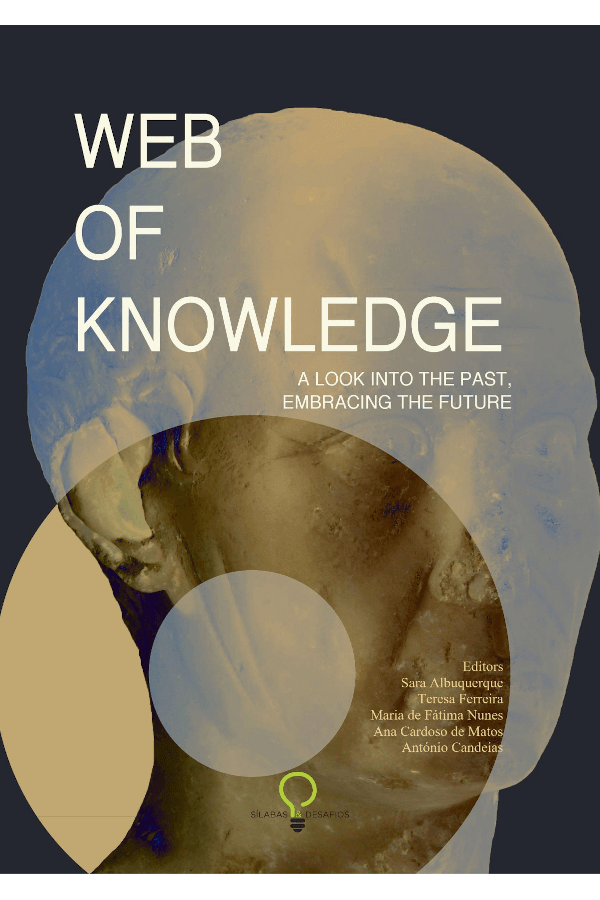
The Portuguese schools of engineers in Lisbon and Porto: continuity and discontinuity of the models and the creation of the national and international networks
- Ana Cardoso de Matos & Maria da Luz Sampaio
- Web of Knowledge: A Look into the Past, Embracing the Future
- Sara Albuquerque, Teresa Ferreira, Maria de Fátima Nunes, Ana Cardoso de Matos and António Candeias (Eds.)
- 2019
- Évora / Faro: Universidade de Évora / Sílabas & Desafios
- Language: English
- ISBN: 978-989-8842-41-1
- 65-69
In the 1910’s, with the establishment of a Republican Regime, were created two new schools of engineering: The Instituto Superior Técnico (Technical Institute) in Lisbon in 1911, and the Faculdade Técnica (Technical Faculty) in Porto, in 1915. In this paper we want to analyse the new pedagogical projects of Instituto Superior Técnico and Faculdade Técnica of University of Porto, and identify the academic and business networks linked to these schools. For this approach we will try to make a comparison between the creation and teaching of the two schools and the professors of each one.
About the book:
The International Multidisciplinary Congress – Web of Knowledge: A look into the Past, embracing the Future was held by IHC-CEHFCi, HERCULES Laboratory and CIDEHUS, University of Évora and took place in Évora, Portugal, from 17 to 19 May 2018.1 The Congress brought together researchers and scientists from different backgrounds intersecting the Exact Sciences with the Social Sciences revealing the visible and invisible networks. By fostering the exchange of knowledge and experiences in the study of the past, the Congress laid the framework for the present day science on which to map the future Web of Knowledge. A high-quality scientific programme was prepared, joining together experts from different fields covering a wide range of topics from Social Sciences, Arts and Humanities to Science and Technology. As a result of the quality of the panels and debates, the Organizing Committee decided to publish a digital and open access volume with blind peer-reviewed papers. This volume publishes a total of thirty-five contributions which reflect the innovative and multidisciplinary research occurring at the moment in different fields of knowledge, promoting visibility and networks of knowledge.
Other publications
Search
Events
setembro, 2026
Tipologia do Evento:
Todos
Todos
Colloquium
Conference
Conference
Congress
Course
Cycle
Debate
Exhibition
Launch
Lecture
Meeting
Movie session
Open calls
Opening
Other
Presentation
Round table
Seminar
Showcase
Symposium
Tour
Workshop
- Event Name
seg
ter
qua
qui
sex
sab
dom
-
1
2
3
4
5
6
7
8
9
10
11
12
13
14
15
16
17
18
19
20
21
22
23
24
25
26
27
28
29
30

Detalhes do Evento
Conference that seeks to challenge historical revisionism, amplify marginalised voices, and foster transnational dialogues on reconciliation, accountability, and restorative justice. The Public History of Difficult Pasts 8th International
Ver mais
Detalhes do Evento
Conference that seeks to challenge historical revisionism, amplify marginalised voices, and foster transnational dialogues on reconciliation, accountability, and restorative justice.
The Public History of Difficult Pasts
8th International Conference on Public History
IFPH 2026
The 8th International Conference on Public History, organised by the International Federation for Public History, IFPH, will take place in Lisbon from September 7 to 11, 2026. It will be hosted by IN2PAST – the Associate Laboratory for Research and Innovation in Heritage, Arts, Sustainability and Territory, a transdisciplinary consortium of seven research centres, at the Almada Negreiros College on the Campolide Campus of NOVA University Lisbon.
In a time of escalating attacks by right-wing movements on memory, diversity, human rights, democracy, and history itself, the IFPH reaffirms its commitment to fostering critical engagement with the ways societies confront, interpret, and relate to their difficult pasts and challenging presents. The IFPH strongly condemns book banning, the censorship of historical narratives, the surveillance of students and educators, the targeting of sites of remembrance, and the imposition of ideological agendas — particularly right-wing distortions — that not only threaten academic freedom but undermine the very principles upon which public history is built. Against this backdrop, the conference seeks to challenge historical revisionism and silencing, to amplify marginalised voices and memories, and to promote transnational dialogues on reconciliation, accountability, and restorative justice.

Public History has long addressed global historical processes such as colonialism, the transatlantic slave trade, and the genocide of Indigenous peoples, as well as phenomena that emerge in multiple contexts, including armed conflicts and dictatorships. It embodies both a political and ethical commitment to examining how difficult pasts have been lived and remembered by different communities and individuals, ensuring that their perspectives are acknowledged and respected. At the same time, engaging with these histories through Public History raises significant challenges. Sharing authority with specific communities and amplifying marginalised narratives may unintentionally silence other voices, while also presenting complex ethical dilemmas. Furthermore, Public History operates within the public sphere, engaging diverse audiences and navigating competing representations of the past in an era increasingly marked by the political instrumentalisation of history and the spread of revisionist and denialist discourses.

🔗 Free registration HERE.
Call for contributions
This conference seeks to challenge historical revisionism, amplify marginalised voices, and foster transnational dialogues on reconciliation, accountability, and restorative justice. We invite contributions that explore:
Historical Contexts and Global Processes
-
- Colonialism and its enduring legacies
- The transatlantic slave trade and its commemorations
- Indigenous genocide and cultural destruction
- Armed conflicts, civil wars, and their aftermath
- Dictatorships, authoritarianism, and state violence
- Mass atrocities and crimes against humanity
Contemporary Challenges and Methodological Innovations
-
- Countering historical denial and revisionism
- Navigating contested memories and competing narratives
- Sharing authority with affected communities
- Ethical dilemmas in representing traumatic pasts
- Digital humanities, media, and social networks
- Museum practices and memorial sites
- Archives, and archival activism
- Educational approaches to sensitive histories
Voices and Perspectives
-
- Survivor testimonies and intergenerational trauma
- Community-based historical projects
- Oral history and marginalised narratives
- Gender, sexuality, and intersectional approaches
- Youth engagement with difficult pasts
- Transnational and comparative perspectives
Justice and Reconciliation
-
- Truth commissions and transitional justice
- Reparations and historical redress
- Memorialisation and commemoration practices
- Restorative justice approaches
- Healing and collective memory
- Building inclusive historical narratives
Calendar
Opening of the Call for Presentations: 30 September 2025
Deadline for Application: 30 November 7 December 2025 [new deadline]
Deadline for reviewers to do their reviews: 31 January 2026
Call for posters: January 2026
Results of the Call for Presentations will be announced by March 2026
Programme of the conference shall be available around June 2026
Deadline for registration for on-site attendance: August 2026
Conference: 7-11 September 2026
Submission of proposals
🔗 Submit your panel proposal HERE.
🔗 Submit your paper proposal HERE.
🔗 Submit your Working Group proposal HERE.
>> Download the call for papers (PDF) <<
Tempo
7 (Segunda-feira) 11:00 am - 11 (Sexta-feira) 6:00 pm
Organizador
Several Institutions

Detalhes do Evento
A discussion based on the book 'European Perspectives on Transition'. With Pablo Sánchez León and José Neves.
Ver mais
Detalhes do Evento
A discussion based on the book ‘European Perspectives on Transition‘. With Pablo Sánchez León and José Neves.
Conversa sobre conceitos, transição e revolução
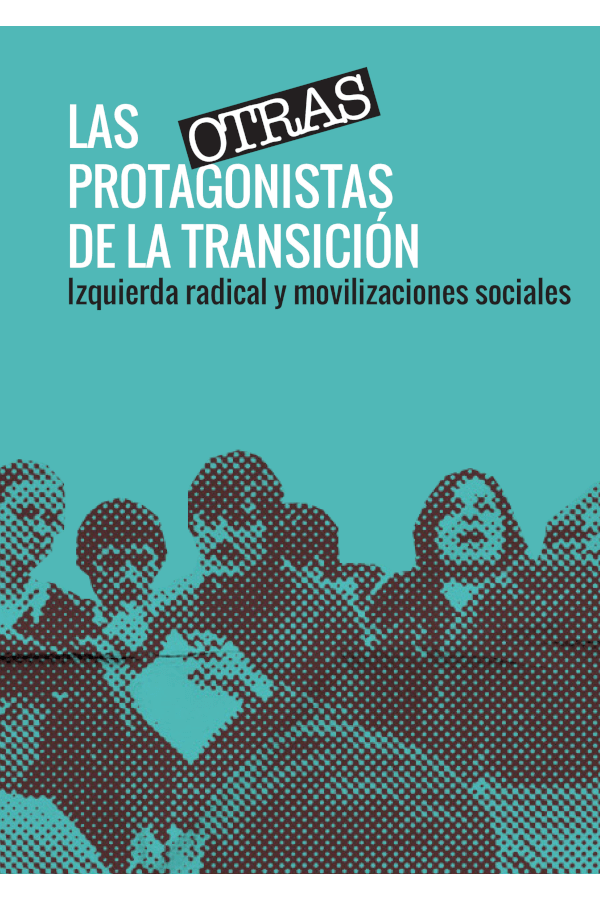
O conceito de transição ocupa um lugar incómodo nos estudos sobre a história europeia contemporânea. Aparentemente incapaz de decifrar os complexos factores que moldam os processos de democratização, parece muitas vezes redundante como estrutura para a compreensão dos desenvolvimentos políticos recentes e em curso. Em European Perspectives on Transition: A Comparative and Transnational Approach to the History of a Political and Social Concept, Pablo Sánchez León e Agustín Cosovschi mostram o contrário, oferecendo uma história conceptual pioneira e muito necessária da transição numa perspectiva comparativa. Reunindo oito estudos de caso sobre o discurso transicional, que vão desde a chamada Terceira Vaga do Sul da Europa na década de 1970 até às mudanças de regime na Europa Central e Oriental, este volume apresenta um novo e importante caminho para o estudo da temporalidade e da transição na Europa.
Conversa entre Pablo Sánchez León e José Neves, com moderação de Rita Luís.
Tempo
(Sexta-feira) 6:00 pm - 8:00 pm
Organizador
Institute of Contemporary History — NOVA School of Social Sciences and Humanities and Tigre de Papel
News
PHONLAB gives rise to a permanent exhibition at the University of Coimbra
Sep 10, 2026
‘Armando de Lacerda Wing’ opens on 17 September
Lisbon is hosting the 8th International Conference on Public History
Aug 31, 2026
Under the theme ‘The Public History of Difficult Pasts’
Fifth edition of the Amílcar Cabral Prize
Jul 27, 2026
Applications are due by 30 September
CONTACTS
WORKING HOURS