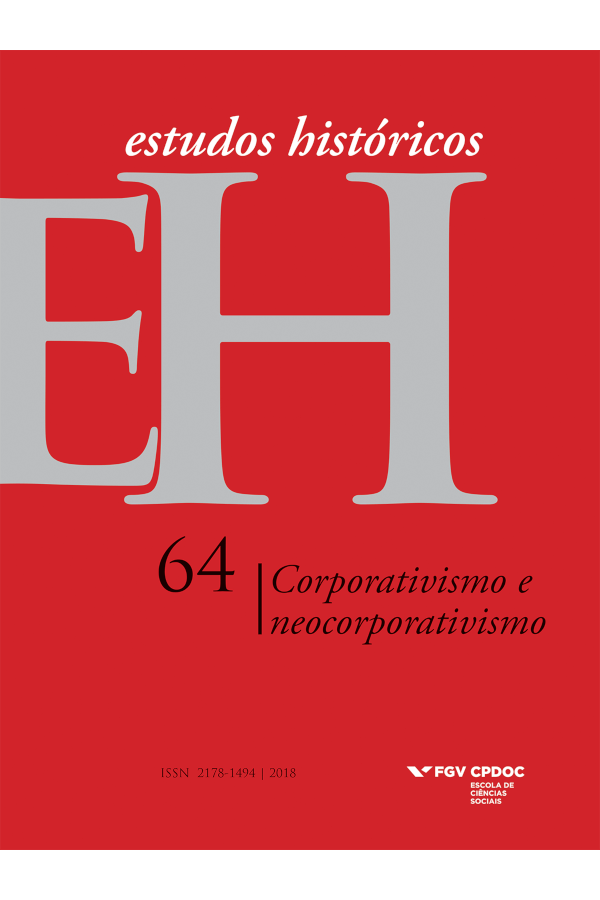
In the genesis of the Political Constitution of 1933
Oct 18, 2018 | Papers, Publications

In the genesis of the Political Constitution of 1933: the corporate ideology and the economic-social structure of Portuguese authoritarianism
- Paula Borges Santos
- 2018
- Estudos Históricos
- Volume 31, Issue 64
- 173-196
- Language: Portuguese
- DOI: http://dx.doi.org/10.1590/S2178-14942018000200004
- ISSN: 2178-1494
Article included in the thematic issue “Corporativismo e neocorporativismo“.
The institutionalization of the Portuguese authoritarian state had as its main landmark the promulgation of the Political Constitution of 1933. in which the corporate ideology was inscribed More than having a stabilizing profile, it was projected as an ideal of the state project to be built. Though with a wide regulatory range, the Constitution influenced mainly the economic domain. It remains to be studied how the economic and social architecture of the 1933 Constitution was conceived or which political negotiations explain its final design. Taking Jon Elster’s statement that the process of writing a constitution is little explored, both in national case studies and in comparative ones, this article seeks to contribute toward filling in this gap. It will take in consideration the cognitive assumptions of the creators of the Portuguese constitutional text of 1933, as well as their beliefs about the institutional arrangements capable of producing better results.
Keywords:
State; Authoritarianism; Constitution, corporatism; Economic organization; Portugal
Other publications
Search
Events
maio, 2026
Tipologia do Evento:
Todos
Todos
Colloquium
Conference
Conference
Congress
Course
Cycle
Debate
Exhibition
Launch
Lecture
Meeting
Movie session
Open calls
Opening
Other
Presentation
Round table
Seminar
Showcase
Symposium
Tour
Workshop
- Event Name
seg
ter
qua
qui
sex
sab
dom
-
-
-
-
1
2
3
4
5
6
7
8
9
10
11
12
13
14
15
16
17
18
19
20
21
22
23
24
25
26
27
28
29
30
31

Detalhes do Evento
A conference aimed at exploring the potential of the intersection between the social sciences and literature, through a literary work and its role in interpreting social processes. Literatura e

Ver mais
Detalhes do Evento
A conference aimed at exploring the potential of the intersection between the social sciences and literature, through a literary work and its role in interpreting social processes.
Literatura e Sociedade
As ciências sociais podem ser literárias, propôs Ivan Jablonka, com o derrubamento da fronteira entre a literatura e a História. Para explorar essa relação feliz, convidámos um conjunto de pesquisadores/as a examinar as potencialidades do encontro entre as ciências sociais e a literatura, através de uma obra literária, escolhida pelos participantes, e do seu papel na leitura dos processos sociais. A etnografia, a história, a sociologia, a ciência política, os estudos culturais, contribuem com factos e conceitos, a literatura trabalha-os pela escrita, para ultrapassar as fronteiras entre o íntimo e subjetivo, os temas graves e colectivos, os acontecimentos, as sociedades, as instituições, as resistências e os movimentos sociais. Como recordava Maurice Godelier, a ficção contém mais do que o imaginado e imaginário, porque ajusta ao suporte de um livro vários componentes dos mundos, reais e irreais, com personagens, acontecimentos, símbolos, conferindo legibilidade às sociedades e suas dimensões. Quer o passado, cujo conhecimento resulta do trabalho sobre fontes de diversa etiologia, que abrem o campo das possibilidades do conhecimento, quer os futuros em disputa, de modo prospectivo, confrontam quem investiga com campos de possibilidades. Seja pela base documental, seja pelo encadeamento causal, a literatura não é só um mundo de seres imaginários, oposto ao mundo da realidade efectiva. Com Jacques Rancière, consideramos que a ficção é uma estrutura de racionalidade que permite comparar traços esparsos na construção de situações e de personagens identificáveis, designar acontecimentos, estabelecer ligações entre esses acontecimentos e dar-lhes um sentido. É dessa matéria que partimos nesta conferência.
Organização:
Maria Alice Samara (IHC — NOVA FCSH / IN2PAST)
Débora Dias (CHAM — NOVA FCSH)
Elena Freire (USC)
Paula Godinho (IHC — NOVA FCSH / IN2PAST)
Locais:
Biblioteca Nacional de Portugal, Lisboa
Casa da Achada — Centro Mário Dionísio, Lisboa
Museu do Neo-Realismo, Vila Franca de Xira
Tempo
14 (Quinta-feira) 9:30 am - 16 (Sábado) 5:00 pm
Localização
Several locations
Organizador
Institute of Contemporary History and CHAM - Centre for the Humanities, NOVA FCSH, Universidade NOVA de Lisboa
News
Marta Pinto Machado in a double bill in Lisbon: MNAC and CCCV
May 14, 2026
“Ceci n’est Pas Francisco” is at MNAC and will extend to CCCV
VINCULUM is still going in Madeira
May 12, 2026
The Inscription I of the Church of Machico will serve as the theme for a series of cultural events
Nuno Silas is exhibiting at MUHNAC
Apr 29, 2026
He is one of the curators of the exhibition “Olhares Críticos no Arquivo Colonial – Sombras e Memórias”
CONTACTS
WORKING HOURS