Manuel Borges Grainha
Mar 28, 2019 | Chapters, Publications

Manuel Borges Grainha
- António Carrilho
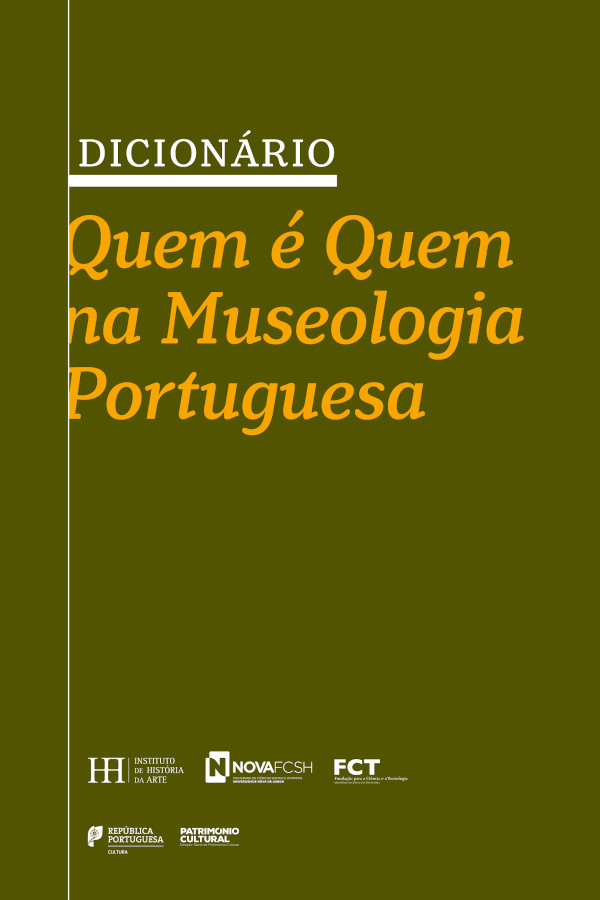
- Dicionário Quem é Quem na Museologia Portuguesa
- Emília Ferreira, Joana d’Oliva Monteiro & Raquel Henriques da Silva (Coords.)
- 2019
- Lisbon: Instituto de História da Arte da Faculdade de Ciências Sociais e Humanas/NOVA
- Language: Portuguese
- ISBN: 978‑989‑54405‑0‑4
- 143-145 p.
Excerpt:
Covilhã, 1862 – Lisboa, 1925
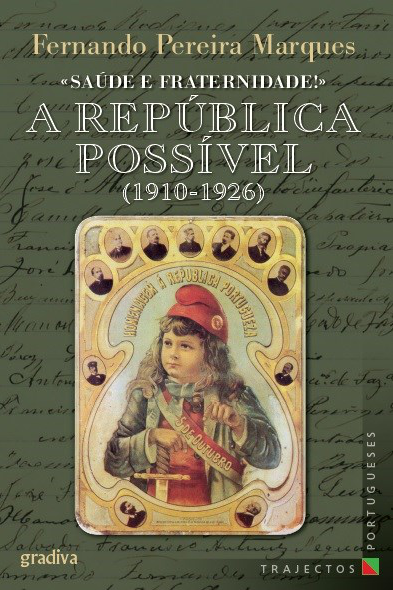
Borges Grainha nasceu na Covilhã, a 14 de janeiro de 1862. Tendo-se mudado para Lisboa depois de romper com os estudos sacerdotais jesuíticos que o ocuparam até 1886, frequentou o Curso Superior de Letras, que concluiu em 1899. Dedicou -se então ao ensino, mas também à escrita pedagógica, jornalística e política. Simpatizante dos ideais republicanos, revelou-se um aceso anticlericalista e antijesuíta, publicando artigos desse teor na imprensa, caracteres que deixam perceber o porquê de ter sido o diretor e organizador do efémero Museu da Revolução (do 5 de outubro), criado em 1910, aberto ao público em 1 de janeiro de 1911 (Fig. 1) e destruído no âmbito da tentativa monárquica frustrada de derrubar a República, liderada por João de Azevedo Coutinho, na noite de 20 para 21 de outubro de 1913 (Portugal, 1993).
About the book:
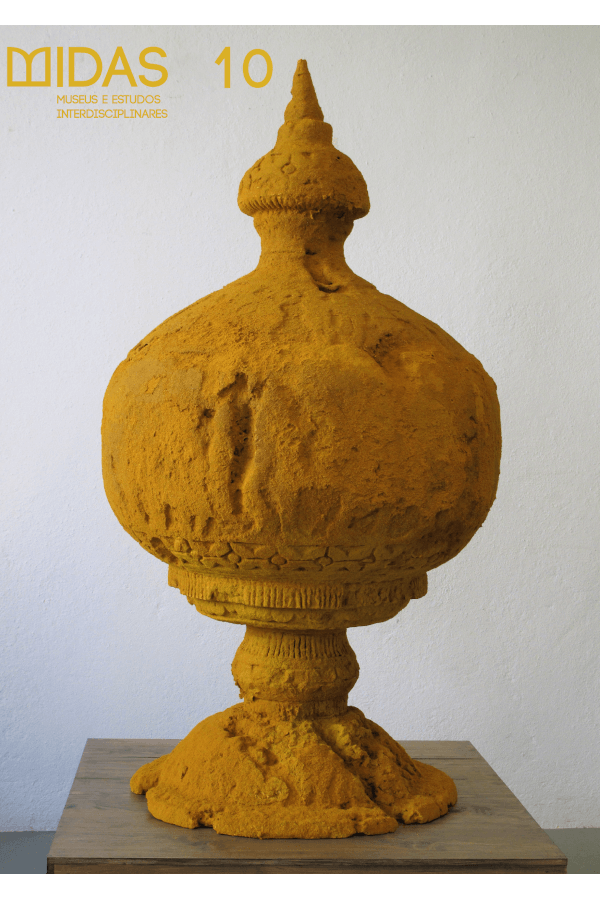
O Dicionário Quem é Quem na Museologia Portuguesa, acessível no site do Instituto de História de Arte da Faculdade de Ciências Sociais e Humanas da Universidade Nova de Lisboa (IHA—FCSH/NOVA), é um projeto em curso da linha de investigação Estudos de Museus. Como objetivo fundamental, propõe-se facultar uma visão abrangente, um conhecimento preciso e uma valorização atualizada das personalidades ligadas à museologia portuguesa, atuantes em diferentes tipologias científicas. Visa contribuir, também, para uma mais ampla compreensão da história dos museus e da museologia. Inscrita na tipologia de iha-seed-projects (micro-projetos), uma das linhas estruturais estratégicas do IHA—FCSH/NOVA, aposta nas virtualidades da publicação online em acesso aberto, potenciadora de uma proveitosa interação entre utilizadores e recursos, em permanente atualização. O primeiro volume do Dicionário é dedicado a personalidades da museologia portuguesa que desenvolveram a sua atividade entre o século XVIII e os anos 1960. Esta delimitação temporal é meramente operativa e conjuntural: entendeu-se que é necessária maior distância cronológica para se estudar o impacto das ações e das contribuições teóricas e profissionais dos biografados que estão ainda em atividade ou deixaram de estar em tempos muito recentes. No entanto, considera-se que a continuação do projeto permitirá agendar a sua indispensável atualização
Other Publications
Search
Events
setembro, 2026
Tipologia do Evento:
Todos
Todos
Colloquium
Conference
Conference
Congress
Course
Cycle
Debate
Exhibition
Launch
Lecture
Meeting
Movie session
Open calls
Opening
Other
Presentation
Round table
Seminar
Showcase
Symposium
Tour
Workshop
- Event Name
seg
ter
qua
qui
sex
sab
dom
-
1
2
3
4
5
6
7
8
9
10
11
12
13
14
15
16
17
18
19
20
21
22
23
24
25
26
27
28
29
30

Detalhes do Evento
8th edition of the IWHSCR. It will place a special emphasis on experimental phonetics as an emerging field at the intersection of the humanities, medical sciences, and engineering, which underwent
Ver mais
Detalhes do Evento
8th edition of the IWHSCR. It will place a special emphasis on experimental phonetics as an emerging field at the intersection of the humanities, medical sciences, and engineering, which underwent rapid development throughout the twentieth century.
8th International Workshop on the History of Speech Communication Research
(IWHSCR)
Following its launch in Dresden in 2015, and subsequent editions in Helsinki (2017), Vienna (2019), Prague (2021), Porto (2022), Budapest (2024), and Paris (2025), the 8th edition of the IWHSCR will be organised by members of the PHONLAB project (2022.06811.PTDC), in collaboration with the Faculty of Arts and Humanities of the University of Coimbra.
This edition will place a special emphasis on experimental phonetics as an emerging field at the intersection of the humanities, medical sciences, and engineering, which underwent rapid development throughout the twentieth century. Particular attention will be given to the role of institutions, internationally engaged scientific actors, and the creation of innovative scientific spaces, technologies, and techniques.
Keynote speakers:
Ana Simões is full professor of History of Science at the Faculty of Sciences, University of Lisbon, Portugal, and member of the Centre for the History of Science and Technology (CIUHCT), which she (co-)coordinated from 2007 to 2019. She is the President-elect of the Division for the History of Science and Technology (2025–2029) – a division of the International Union for the History and Philosophy of Science and Technology (IUHPST) – and was previously the President of the European Society for the History of Science (2018–2020). She has written extensively on the history of quantum chemistry, and aspects of history of science in Portugal, 18th to 20th centuries, including popularisation of science and science and the city, framed by a historiographical reflection on the circulation of science including non-central places. She is a founding member of the international network Science and Technology in the European Periphery. She is member of several national and EU projects, editorial boards, scientific advisory boards and scientific societies.
Bernd Möbius studied phonetics, linguistics and sociology at the University of Bonn, where he also received his PhD degree in 1992. He was a member of technical staff (senior researcher) at Bell Labs in Murray Hill, NJ, from 1993 to 1998, and Assistant and Associate Professor at the University of Stuttgart from 1999 to 2011. After being Acting chair of Phonetics and Speech Communication at the University of Bonn (2007-2010), he was Full Professor of Phonetics and Phonology in the Department of Language Science and Technology at Saarland University from 2011 to 2025, where he is now a Senior Professor. A central theme of his research is to integrate phonetic knowledge in speech technology. He has worked extensively on text-to-speech synthesis and speech prosody, and recent work has focused on experimental methods and computational simulations to study aspects of speech production, perception and acquisition.
Call for papers
Contributions addressing this focus are welcome, as are submissions on any topics related to the historical aspects of speech communication research. Submissions must not exceed 10 pages (including references) and must follow the guidelines provided HERE. The proceedings will be published in the book series Studientexte zur Sprachkommunikation by TUDpress and will also be made available electronically in the ISCA archive.
Full paper submissions should be sent to the following email address: phonlab.project@gmail.com
Participation is free, but you must register in advance via this LINK.
Important dates:
Manuscript submission: 15 May 2026
Notification of acceptance: 1 June 2026
Registration: 30 June 2026
Revised manuscript submission: 1 July 2026
Organising Committee:
Albano Figueiredo, Faculty of Arts and Humanities, University of Coimbra
Ângela Salgueiro, University of Évora and IHC / IN2PAST
Jürgen Trouvain, Saarland University
Quintino Lopes, University of Évora and IHC / IN2PAST
Tempo
17 (Quinta-feira) 12:00 am - 18 (Sexta-feira) 6:00 pm
Localização
Faculty of Arts and Humanities — University of Coimbra
Largo da Porta Férrea — 3000-370 Coimbra
Organizador
Several Institutions
Detalhes do Evento
Opening of an exhibition exploring the history of the Laboratory of Experimental Phonetics of Coimbra. An initiative of the PHONLAB project. Armando de Lacerda Wing: Laboratory of Experimental Phonetics
Ver mais
Detalhes do Evento
Opening of an exhibition exploring the history of the Laboratory of Experimental Phonetics of Coimbra. An initiative of the PHONLAB project.
Armando de Lacerda Wing: Laboratory of Experimental Phonetics of Coimbra
During the 8th International Workshop on the History of Speech Communication Research (IWHSCR), participants will have the opportunity to take part in a guided visit to the exhibition Armando de Lacerda Wing: Laboratory of Experimental Phonetics of Coimbra, located on the Faculty of Arts and Humanities of the University of Coimbra.
The exhibition explores the history of phonetics in Portugal, with a particular focus on the Laboratory of Experimental Phonetics of Coimbra and its director, Armando de Lacerda. It brings together scientific instruments, archival materials, and oral testimonies to preserve and showcase the Laboratory’s legacy, offering a critical perspective on a largely overlooked chapter in twentieth-century phonetics research.
This exhibition is the result of the PHONLAB project, funded by the Foundation for Science and Technology (2022.06811.PTDC), in collaboration with the Rectorate of the University of Coimbra, its Science Museum, and Faculty of Arts and Humanities.
Tempo
(Quinta-feira) 5:30 pm - 7:00 pm
Localização
Faculty of Arts and Humanities — University of Coimbra
Largo da Porta Férrea — 3000-370 Coimbra
Organizador
Several Institutions
News
IHC renews its governing bodies and coordination teams
Sep 15, 2026
Rui Lopes is the new President of the Board of Directors
PHONLAB gives rise to a permanent exhibition at the University of Coimbra
Sep 10, 2026
‘Armando de Lacerda Wing’ opens on 17 September
Lisbon is hosting the 8th International Conference on Public History
Aug 31, 2026
Under the theme ‘The Public History of Difficult Pasts’
CONTACTS
WORKING HOURS