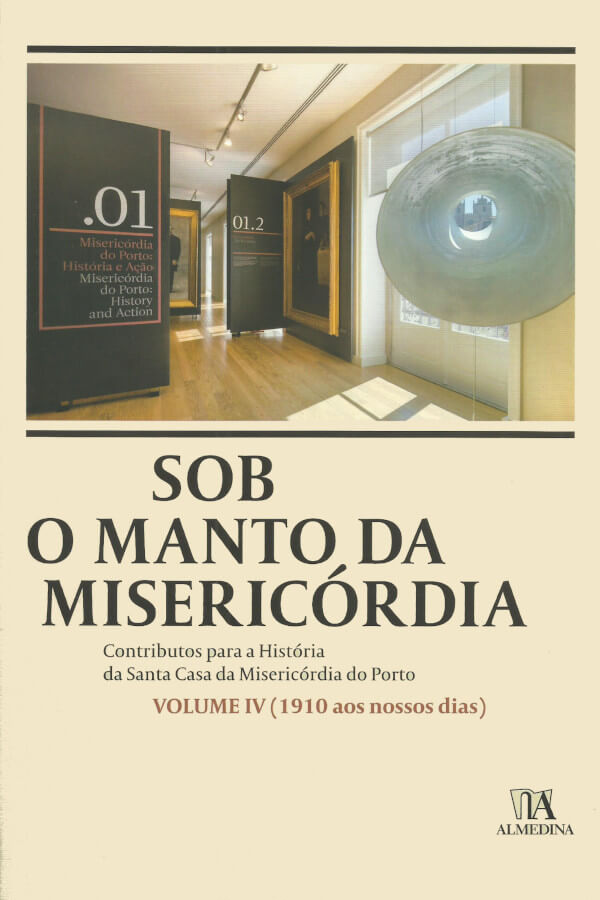
António José Branquinho da Fonseca
Mar 28, 2019 | Chapters, Publications

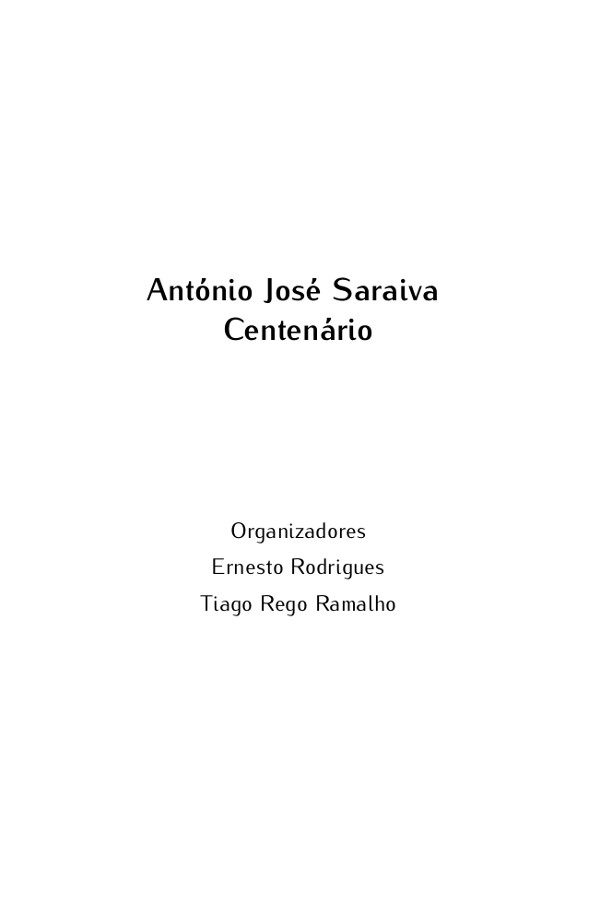
António José Branquinho da Fonseca
- Maria Mota Almeida
- Dicionário Quem é Quem na Museologia Portuguesa
- Emília Ferreira, Joana d’Oliva Monteiro & Raquel Henriques da Silva (Coords.)
- 2019
- Lisbon: Instituto de História da Arte da Faculdade de Ciências Sociais e Humanas/NOVA
- Language: Portuguese
- ISBN: 978‑989‑54405‑0‑4
- 118-120 p.
Excerpt:
Laceiras [Mortágua], 1905 – Cascais, 1974
Nascido nas Laceiras (Mortágua), António José, filho do republicano Tomás da Fonseca, licenciou-se em Direito na Universidade de Coimbra. Em 1924 fundou a revista Tríptico e, em 1927, lança, em conjunto com José Régio e João Gaspar Simões, a presença – folha de arte e crítica.
About the book:
O Dicionário Quem é Quem na Museologia Portuguesa, acessível no site do Instituto de História de Arte da Faculdade de Ciências Sociais e Humanas da Universidade Nova de Lisboa (IHA—FCSH/NOVA), é um projeto em curso da linha de investigação Estudos de Museus. Como objetivo fundamental, propõe-se facultar uma visão abrangente, um conhecimento preciso e uma valorização atualizada das personalidades ligadas à museologia portuguesa, atuantes em diferentes tipologias científicas. Visa contribuir, também, para uma mais ampla compreensão da história dos museus e da museologia. Inscrita na tipologia de iha-seed-projects (micro-projetos), uma das linhas estruturais estratégicas do IHA—FCSH/NOVA, aposta nas virtualidades da publicação online em acesso aberto, potenciadora de uma proveitosa interação entre utilizadores e recursos, em permanente atualização. O primeiro volume do Dicionário é dedicado a personalidades da museologia portuguesa que desenvolveram a sua atividade entre o século XVIII e os anos 1960. Esta delimitação temporal é meramente operativa e conjuntural: entendeu-se que é necessária maior distância cronológica para se estudar o impacto das ações e das contribuições teóricas e profissionais dos biografados que estão ainda em atividade ou deixaram de estar em tempos muito recentes. No entanto, considera-se que a continuação do projeto permitirá agendar a sua indispensável atualização.
Other Publications
Search
Events
novembro , 2025
Tipologia do Evento:
Todos
Todos
Colloquium
Conference
Conference
Congress
Course
Cycle
Debate
Exhibition
Launch
Lecture
Meeting
Movie session
Open calls
Opening
Other
Presentation
Round table
Seminar
Showcase
Symposium
Tour
Workshop
- Event Name
seg
ter
qua
qui
sex
sab
dom
-
-
-
-
-
1
2
3
4
5
6
7
8
9
10
11
12
13
14
15
16
17
18
19
20
21
22
23
24
25
26
27
28
29
30

Detalhes do Evento
Workshop that aims to place the OAU initiatives in their context and help consolidate analyses of its solidarity as a critical subject of the end of colonialism and white minority
Ver mais
Detalhes do Evento
Workshop that aims to place the OAU initiatives in their context and help consolidate analyses of its solidarity as a critical subject of the end of colonialism and white minority regimes.
The Organization of African Unity and the Struggle against Colonialism and Racism in Africa
The study of international organizations is an emerging field that covers a topic of growing importance in academia. In recent decades, the contributions of such organizations as actors in international relations have received increasing attention (Iriye 2004). Theoretical and empirical analyses seek to provide insights into the work of intergovernmental organizations, nongovernmental organizations, or transnational networks. By expanding their geographical scope beyond national borders, scholars interested in international organizations have reflected the myriad ways in which they can be studied (Hurd 2012).
The Organization of African Unity (OAU), as a regional organization, has been the subject of ongoing research (Gassama 2015). However, a review of existing publications reveals that relatively few studies have addressed the OAU’s solidarity against colonialism and racism in Africa. Several reasons may explain this situation. Comparatively, the OAU has received less attention than other international organizations, notably the United Nations. Research has mainly focused on its establishment and achievements in conflict resolution, cooperation and development (Muchie et al. 2014; Naldi 1999). Difficulties in accessing primary sources may also have contributed to the diversion of interest from the OAU’s contribution to decolonization and the end of white minority regimes.
Writing on the subject has mostly been done at the time of the events and lacks historical perspective (Binaisa 1977; El-Khawas 1978). The accounts are limited in scope, discussing primarily the OAU’s support for the liberation movements of Zimbabwe, Namibia and South Africa (Klotz 1995; Thomas 1996). With regard to the Portuguese colonies, with the exception of the work of Walraven (1999), it is difficult to find an overarching narrative, and the available information is mostly found in publications that do not focus on the topic as a primary concern (Sousa 2011; Tíscar Santiago 2013).
Thus, a more critical approach is needed to question what the OAU did to support the struggle against colonialism and racism in Africa, as well as the complexities and nuances involved. With this situation in mind, we intend to explore the OAU’s solidarity with the struggle against colonialism and racism in Africa in a workshop in-person and online that will take place in Lisbon, at the Institute of Contemporary History of the NOVA University of Lisbon, on 13 and 14 November 2025.
Call for papers
The workshop aims to place the OAU initiatives in their context and help consolidate analyses of its solidarity as a critical subject of the end of colonialism and white minority regimes. In addition, the workshop will contribute to rethinking the gaps in historiography by examining the OAU solidarity as a transnational phenomenon that transcended national boundaries.
We welcome proposals for 20-minute presentations on these and other topics:
- The extent to which the OAU played a role in ending colonialism and racism on the African continent;
- How the Liberation Committee was instrumental in the strategy of the OAU to undermine colonial rule and racist minority rule;
- How the attitudes of a number of states, due to inter-African competition, shaped the OAU’s policies on colonialism and racism;
- How the diplomacy of the OAU sought to shape the debate at the UN on colonialism and racism;
- How the OAU engaged with non-African countries as part of its support to the struggle for independence and against apartheid;
- How the organization worked as an intermediary in the support given by third parties to anti-colonial and anti-racist organizations;
- The importance of the relationship with the OAU for anti-colonial and anti-racist organizations to advance their agenda;
- The tensions and disagreements between the OAU and the anti-colonial and anti-racist organizations;
- The extent to which the anti-colonial and anti-racist organizations sought to use the OAU not only against the colonial and racist powers, but also to sideline competing groups.
Abstracts for presentations (200 words) and a biographical note (250 words) should be sent to: OAUconference@gmail.com
Deadline for submissions: 8 August 2025
Notification of acceptance: 15 August 2025
The organizers foresee the publication of the communications. The first draft of the papers is due on 30 January 2026.
>> Download the call for papers (PDF) >>
Organization:
Aurora Almada e Santos (IHC — NOVA FCSH / IN2PAST)
References:
BINAISA, Godfrey – «Organization of African Unity and Decolonization: Present and Future Trends» in The ANNALS of the American Academy of Political and Social Science Vol. 432 (1977).
EI-KHAWAS, Mohamed A. – «The Quiet Role of OAU in Africa’s Liberation» in New Directions Vol. 5, Issue 2 (1978).
GASSAMA, Muhammad – From the OAU to the AU: The Odyssey of a Continental Organization. Paris: l’Harmattan, 2015.
HURD, Ian – Choices and Methods in the Study of International Organizations. Available at <URL:http://www.unstudies.org/sites/unstudies.org/files/hurd_jios.pdf>, on 18/03/2012.
IRIYE, Akira – Global Community: The Role of International Organizations in the Making of the Contemporary World. Berkeley: University of California Press, 2004.
KLOTZ, Audie – Norms in International Relations: The Struggle Against Apartheid. Ithaca; London: Cornell University Press, 1995.
MUCHIE, Mammo et al. (ed.) – Unite or Perish: Africa Fifty Years after the Founding of the OAU. Pretoria: Africa Institute of South Africa, 2014.
NALDI, Gino Joseph – The Organization of African Unity: An Analysis of its Role. London: Mansell, 1999.
SOUSA, Julião Soares – Amílcar Cabral (1924-1973). Vida e Morte de um Revolucionário Africano. Lisboa: Nova Vega, Lda, 2011.
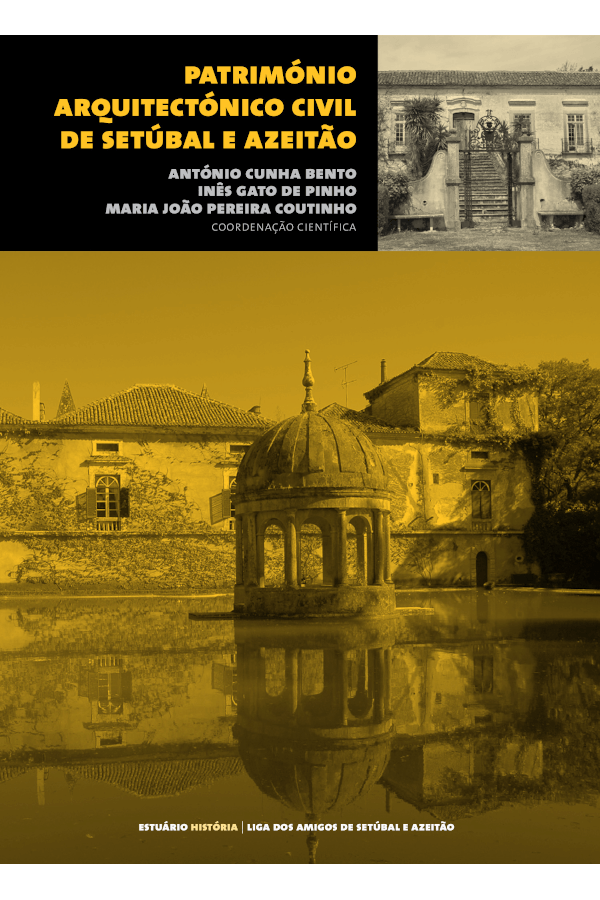
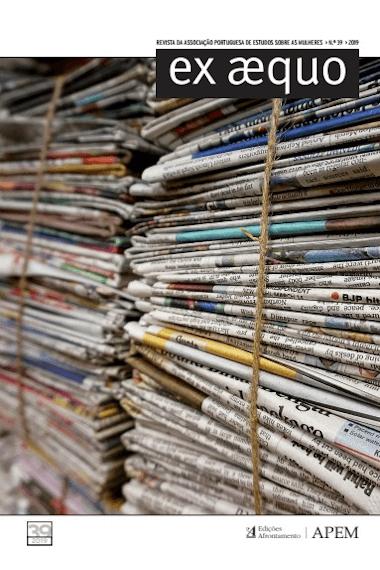
THOMAS, Scott M. – The Diplomacy of Liberation: The Foreign Relations of the ANC Since 1960. London: Tauris Academic Studies, 1996.
TÍSCAR SANTIAGO, María José – Diplomacia Peninsular e Operações Secretas na Guerra Colonial. Lisboa: Edições Colibri, 2013.
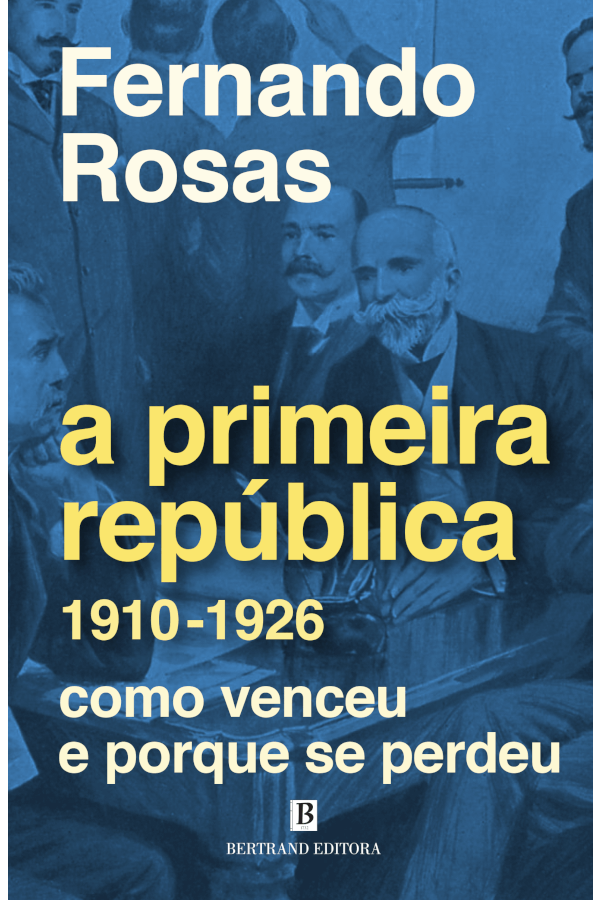
WALRAVEN, Klaas van – Dreams of Power: The Role of the Organization of African Unity in the Politics of Africa. 1963-1993. Leiden: African Studies Centre, 1999.
Tempo
13 (Quinta-feira) 10:00 am - 14 (Sexta-feira) 4:00 pm
Organizador
Institute of Contemporary History — NOVA School of Social Sciences and Humanitiescomunicacao.ihc@fcsh.unl.pt Avenida de Berna, 26C - 1069-061 Lisbon
News
IHC at FCSH Research and Innovation Day
Nov 6, 2025
FCSH will celebrate its Research and Innovation Day with the theme ‘Research on Track’
Mélanie Toulhoat contributes to a University of Geneva project
Oct 30, 2025
Mélanie Toulhoat was invited to join the DEGESUD team — Decentering the “sciences of childhood”
IHC is awarded eight new CEEC contracts from FCT
Oct 22, 2025
New research contracts: four in the Junior category and four in the Assistant category
CONTACTS
WORKING HOURS