Gabriel Victor do Monte Pereira
Mar 28, 2019 | Chapters, Publications

Gabriel Victor do Monte Pereira
- Ana Cristina Martins
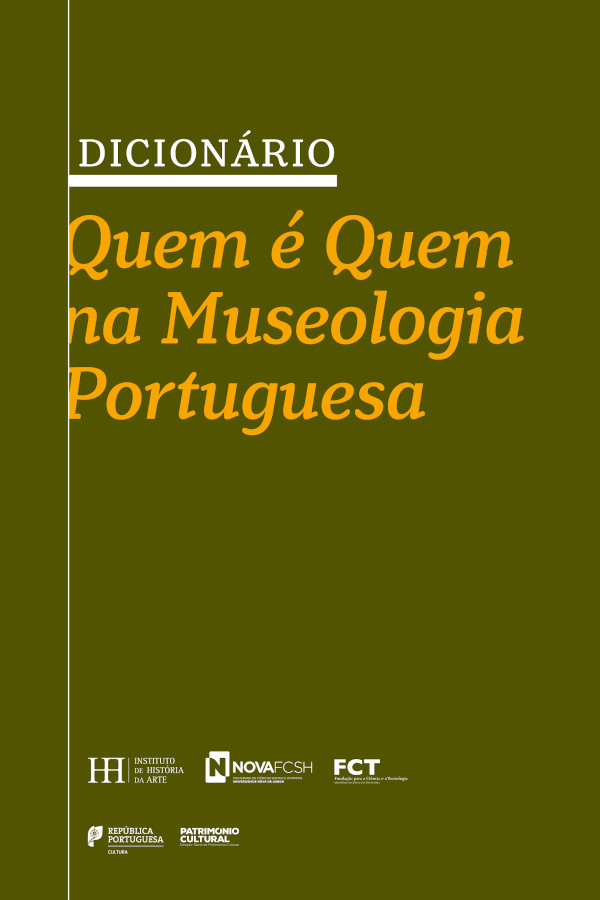
- Dicionário Quem é Quem na Museologia Portuguesa
- Emília Ferreira, Joana d’Oliva Monteiro & Raquel Henriques da Silva (Coords.)
- 2019
- Lisbon: Instituto de História da Arte da Faculdade de Ciências Sociais e Humanas/NOVA
- Language: Portuguese
- ISBN: 978‑989‑54405‑0‑4
- 236-238 p.
Excerpt:
Évora, 1847 – Lisboa, 1911
Bibliotecário, arquivista, bibliófilo, historiador, patrimonialista, publicista e escritor, Gabriel Pereira nasce em Évora, a 7 de março de 1847, na antiga Rua da Ladeira, na freguesia de Santo Antão, e falece em Lisboa, a 6 de dezembro de 1911 (Fig. 1). Filho de António Pereira da Silva, professor no Liceu de Évora, e de Luísa do Monte Pereira, de antiga família de lavradores locais, Gabriel Pereira ingressa na Escola Naval em Lisboa, após concluir os estudos primários e liceal em Évora. Abandona -a, porém, para frequentar a Escola Politécnica, que não conclui, estudando Paleografia na Torre do Tombo sem, no entanto, frequentar Letras.
About the book:
O Dicionário Quem é Quem na Museologia Portuguesa, acessível no site do Instituto de História de Arte da Faculdade de Ciências Sociais e Humanas da Universidade Nova de Lisboa (IHA—FCSH/NOVA), é um projeto em curso da linha de investigação Estudos de Museus. Como objetivo fundamental, propõe-se facultar uma visão abrangente, um conhecimento preciso e uma valorização atualizada das personalidades ligadas à museologia portuguesa, atuantes em diferentes tipologias científicas. Visa contribuir, também, para uma mais ampla compreensão da história dos museus e da museologia. Inscrita na tipologia de iha-seed-projects (micro-projetos), uma das linhas estruturais estratégicas do IHA—FCSH/NOVA, aposta nas virtualidades da publicação online em acesso aberto, potenciadora de uma proveitosa interação entre utilizadores e recursos, em permanente atualização. O primeiro volume do Dicionário é dedicado a personalidades da museologia portuguesa que desenvolveram a sua atividade entre o século XVIII e os anos 1960. Esta delimitação temporal é meramente operativa e conjuntural: entendeu-se que é necessária maior distância cronológica para se estudar o impacto das ações e das contribuições teóricas e profissionais dos biografados que estão ainda em atividade ou deixaram de estar em tempos muito recentes. No entanto, considera-se que a continuação do projeto permitirá agendar a sua indispensável atualização
Other Publications
Search
Events
junho, 2026
Tipologia do Evento:
Todos
Todos
Colloquium
Conference
Conference
Congress
Course
Cycle
Debate
Exhibition
Launch
Lecture
Meeting
Movie session
Open calls
Opening
Other
Presentation
Round table
Seminar
Showcase
Symposium
Tour
Workshop
- Event Name
seg
ter
qua
qui
sex
sab
dom
1
2
3
4
5
6
7
8
9
10
11
12
13
14
15
16
17
18
19
20
21
22
23
24
25
26
27
28
29
30

Detalhes do Evento
Three-day conference on the alter-lives of independence movements that explores the evolution and transformation of anti-colonial and anti-imperial struggles. The Alter-lives of Independence Movements: Frustrated Hopes, Renewed Utopias Decades
Ver mais
Detalhes do Evento
Three-day conference on the alter-lives of independence movements that explores the evolution and transformation of anti-colonial and anti-imperial struggles.
The Alter-lives of Independence Movements:
Frustrated Hopes, Renewed Utopias
Decades after formal decolonisation, anti-colonialism and anti-imperialism have remained a wellspring of inspiration and contestation. Studies about anticolonial thought, the 1955 Bandung Conference, and transcontinental solidarity movements have proliferated in academia and activist networks, providing the basis of theories and practices of resistance in contemporary times. Nevertheless, the ideas and the movements they inspired did not perish with the epoch that produced them. They evolved and acquired alternative lives in the period of nation-building and world-making, whether in extended or distorted forms. On the one hand, there were local and transnational efforts to sustain and enrich the revolutionary impulse through embracing the anticolonial spirit in various areas such as development, education, and diplomacy. As international institutions such as the UN welcome additional member states, Europeans and non-Europeans travelled to decolonised states like Algeria and Angola to learn
and further cultivate ideas in building new societies. On the other hand, some dominant groups that took over the independent states capitalised on the anti-colonial pride to justify authoritarian and anti-democratic rule. Their utopian visions led to the systematic oppression of opposing forces and to the reproduction of the hierarchical international state model. The fear of neocolonialism and disillusionment propelled both the former coloniser and colonised to reorganise their strategies and desires in the face of an emerging world order.
This conference on the alter-lives of independence movements explores the evolution and transformation of anti-colonial and anti-imperial struggles. It focuses on events and reflections on the early years of independence, a period of turbulent transition from colonial domination to
self-governing nation-states and the tumultuous beginnings of a new international order. We introduce the concept “alter-lives” to denote the process of altering imaginaries and practices that emerged during the colonial period in responding to uncertain futures, including the
political uses of anticolonial memories and/or histories. It also refers to alternative relations forged between former colonisers and colonised after independence. Thus, using “alter-lives” as a conceptual ground, this conference engages in the following questions: first, how have
anticolonial thinking and practices evolved domestically and transnationally? Second, what were the structural and agential forces behind these evolutions? Third, how were anticolonial memories and histories politicised to achieve certain ends? Fourth, what difficulties did these
agents face in realising their envisioned future? Lastly, how have alterations and alternatives affirmed and/or challenged the revolutionary ideas of the independence struggles?
>> Download the full programme (PDF) <<
Contact:
If you need more information on the conference, please send an email to jiw.hopesandfears@gmail.com.
This event is organised as part of the Joint International Workshop “Hopes and Fears. Anti-colonial and Postcolonial Imaginaries in the Lusotopy and Beyond”, that gathers the Institute of Contemporary History — NOVA University Lisbon / University of Évora, the University of São Paulo, and the Pontifical Catholic University of Rio Grande do Sul.

Tempo
junho 25 (Quinta-feira) - 27 (Sábado)
Localização
Lisbon, Portugal
Organizador
Institute of Contemporary History — NOVA FCSH, University of São Paulo, and Pontifical Catholic University of Rio Grande do Sul
News
Marta Pinto Machado in a double bill in Lisbon: MNAC and CCCV
May 14, 2026
“Ceci n’est Pas Francisco” is at MNAC and will extend to CCCV
VINCULUM is still going in Madeira
May 12, 2026
The Inscription I of the Church of Machico will serve as the theme for a series of cultural events
Nuno Silas is exhibiting at MUHNAC
Apr 29, 2026
He is one of the curators of the exhibition “Olhares Críticos no Arquivo Colonial – Sombras e Memórias”
CONTACTS
WORKING HOURS