Science and diplomacy
Dec 20, 2018 | Papers, Publications

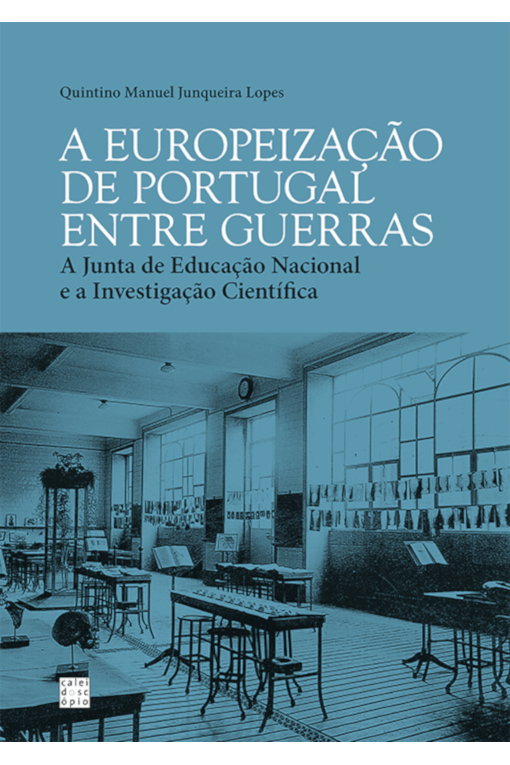
Science and diplomacy: the National Education Board and the League of Nations. Portugal in the 1930s
- Quintino Lopes
- 2018
- e-Journal of Portuguese History
- Volume 16, Number 2
- 42-58
- Language: English
- DOI: https://doi.org/10.26300/rqfn-ww90
- ISSN: 1645-6432
Funded by the Junta de Educação Nacional (JEN—National Education Board), a State institution that aimed to europeanize scientific activity in Portugal in the 1930s, Fernando Silva obtained a PhD at the University of Geneva and became a privatdozent at the Faculty of Law. The authoritarian nationalist Estado Novo, seeking to avoid upsetting the status quo in Portuguese academia, appointed Silva, a specialist in international law, to a post in the Secretariat of the League of Nations, where international interests were assumed to take precedence over national interests. Embodying the ‘Spirit of Geneva,’ he influenced international diplomacy between the wars while acting against the interests of the Portuguese State. This makes interpretation of the actions of a regime that is traditionally seen as having turned its back on the rest of continental Europe even more complex.
Key-words:
League of Nations; Estado Novo; National Education Board; Diplomacy; Fernando Correia Pereira da Silva
Other Publications
Search
Events
janeiro, 2026
Tipologia do Evento:
Todos
Todos
Colloquium
Conference
Conference
Congress
Course
Cycle
Debate
Exhibition
Launch
Lecture
Meeting
Movie session
Open calls
Opening
Other
Presentation
Round table
Seminar
Showcase
Symposium
Tour
Workshop
- Event Name
seg
ter
qua
qui
sex
sab
dom
-
-
-
1
2
3
4
5
6
7
8
9
10
11
12
13
14
15
16
17
18
19
20
21
22
23
24
25
26
27
28
29
30
31

Detalhes do Evento
STEXEU's launch conference, to discuss how states of exception reshaped the roles of governments, security forces, and non-state actors. The Constitutional Road to Dictatorship: States
Ver mais
Detalhes do Evento
STEXEU‘s launch conference, to discuss how states of exception reshaped the roles of governments, security forces, and non-state actors.
The Constitutional Road to Dictatorship:
States of Exception and Authoritarianism in Europe, 1900–39
Liberal democracies in the early twentieth century used emergency powers to confront political unrest, but these measures often paved the way for authoritarian rule. This conference discusses how states of exception reshaped the roles of governments, security forces, and non-state actors, highlighting how constitutional mechanisms intended to defend liberal rule could, in fact, contribute to its erosion and to the rise of fascism.
STEXEU is coordinated by Arturo Zoffmann Rodriguez and funded by the European Research Council.
FREE ADMISSION
Tempo
(Sexta-feira) 10:00 pm - 7:00 pm
Localização
Biblioteca Nacional de Portugal
Organizador
Institute of Contemporary History — NOVA School of Social Sciences and Humanitiescomunicacao.ihc@fcsh.unl.pt Avenida de Berna, 26C - 1069-061 Lisbon
News
Matt Cook is the IHC Visiting Scholar for 2025–2026
Jan 13, 2026
Distinguished social and cultural historian from the University of Oxford
IHC dedicates film cycle to Frantz Fanon
Jan 9, 2026
Film cycle focusing on the relationship between his work and this art form
TRANSMAT publication discusses the legacies and responsibilities of Portuguese museums
Jan 7, 2026
Special supplement to the journal História, Ciências, Saúde — Manguinhos
CONTACTS
WORKING HOURS