Relações laborais em Portugal e no mundo lusófono 1800-2000: Continuidades e ruturas
Coordenadora:
Raquel Varela
Financiamento:
Fundação para a Ciência e Tecnologia (Ref. PTDC/EPH-HIS/3701/2012)
Duração:
2013-2015
Equipa:
Paulo Teodoro de Matos, Jelmer Vos, António Cardoso, Sónia Ferreira, João Paulo Aguiar, Cátia Teixeira, António Simões do Paço, Tarcísio Botelho, Filipa Silva, Maria Augusta Tavares, Paulo Terra
Outras instituições participantes:
Faculdade de Letras da Universidade do Porto
Resumo:
Este projecto visa quantificar, analisar e compreender as relações laborais em Portugal e no mundo lusófono no período contemporâneo, assinalando as formas como a mão-de-obra e as relações laborais se foram modificando e adaptando à evolução social, económica e política de Portugal e do mundo lusófono nos últimos dois séculos. Visamos com este projecto contribuir para preencher uma lacuna das ciências sociais contemporâneas, ou seja, o acesso a uma base de dados global da evolução das relações laborais e da mão-de-obra em Portugal e no mundo lusófono. Igualmente procuramos dar um contributo para a análise destes dados, nomeadamente a nível da composição da força de trabalho, da evolução da formação e qualificação desta, da produtividade e os factores explicativos das modificações ao nível desta dimensão, da capacidade de inovação, adaptação e reestruturação produtivas, e da própria configuração económico-social destas sociedades em análise. A dimensão da lusofonia – dentro deste espaço lusófono estamos a considerar aquele em que há uma presença administrativa e política portuguesa efectiva – é essencial neste projecto. Essa presença efectiva, que tem uma dimensão cultural e social com uma matriz portuguesa, permite-nos analisar em perspectiva comparada estes territórios, quer pela longevidade do sistema colonial português quer pelas relações económicas estreitas entre estes países que se prolongaram para além das independências (Brasil 1822, Índia 1961, Colónias portuguesa em África, 1975). Nomeadamente, este projecto ajuda-nos a compreender o alcance destas relações, quer entre os espaços que são o elo comum da lusofonia quer entre estes espaços e por exemplo os territórios limites. Finalmente este projecto terá ainda uma vertente comparativa, ao ancorar-se num projecto já em curso do Instituto Internacional de História Social, que tem em curso um projecto mundial de estudos das relações laborais (Global Collaboratory on the History of Labour Relations in the Period 1500-2000). O presente projecto como a dimensão portuguesa e lusófona de um projecto mundial, garantindo assim em simultâneo que o projecto mundial não ficará sem uma dimensão portuguesa e lusófona, por um lado e por outro, permitindo a Portugal, através desta estrutura internacional já erguida – nomeadamente um base de dados digital profissional (um laboratório de partilha de dados complexos em versão digital, aberta e de discussão metodológica – a colecta e disponibilização de dados estruturais da sociedade portuguesa e do mundo lusófono, até agora dispersos por arquivos, às vezes separados por continentes, e mesmo o acesso e compreensão de dados até aqui inéditos. Salientamos que a equipa que assegurará este projecto responde aos desafios da interdisciplinaridade, e da internacionalização, e poderá responder à complexidade das questões levantadas quer na recolha dos dados, quer na sua disponibilidade na base de dados digital quer na análise dos mesmos: historiadores, demógrafos históricos, sociólogos e antropólogos. Os membros da equipa já estudaram parcialmente alguns dos aspectos relacionados com as questões e as fontes aqui descritas, o que contribuirá para o sucesso do projecto final. Destacamos no conselho consultivo internacional presença do coordenar do projecto mundial, Jan Lucassen.
Deu origem à publicação:
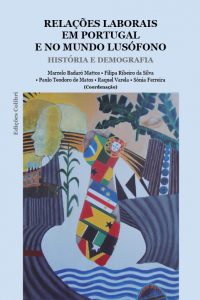
- Mattos, Marcelo Badaró, Filipa Ribeiro da Silva, Paulo Matos, Raquel Varela & Sónia Ferreira (Coords.). Relações Laborais em Portugal e no Mundo Lusófono – História e Demografia. Lisboa: Edições Colibri, 2014. [link] [PDF]
Outros Projectos
-
Coordenação: Maria Fernanda Rollo
-
Coordenação: Maria Fernanda Rollo e Paula Meireles
-
Coordenação: Irene Flunser Pimentel
-
Coordenação: Victor Pereira
-
Coordenação: Maria Fernanda Rollo
-
Coordenação: Luís Mendonça de Carvalho
-
Coordenação: Maria Fernanda Rollo
-
Coordenação: Manuel Loff
-
Coordenação: Nuno Severiano Teixeira
-
Coordenação: Raquel Varela
-
Coordenação: coord
-
Coordenação: Maria Fernanda Rollo
-
Coordenação: Maria Fernanda Rollo
-
Coordenação: Ana Isabel Queiroz
-
Coordenação: Maria Fernanda Rollo, José Maria Brandão de Brito e Alice Cunha
-
Coordenação: Jorge Custódio
-
Coordenação: Rui Lopes
-
Coordenação: Rita Luís

Pesquisa
Agenda
novembro , 2025
Tipologia do Evento:
Todos
Todos
Apresentação
Ciclo
Colóquio
Conferência
Congresso
Curso
Debate
Encontro
Exposição
Inauguração
Jornadas
Lançamento
Mesa-redonda
Mostra
Open calls
Outros
Palestra
Roteiro
Seminário
Sessão de cinema
Simpósio
Workshop
- Event Name
seg
ter
qua
qui
sex
sab
dom
-
-
-
-
-
1
2
3
4
5
6
7
8
9
10
11
12
13
14
15
16
17
18
19
20
21
22
23
24
25
26
27
28
29
30

Detalhes do Evento
Workshop que visa situar as iniciativas da OUA no seu contexto e contribuir para consolidar as análises da sua solidariedade enquanto sujeito crítico do fim do colonialismo e dos regimes
Ver mais
Detalhes do Evento
Workshop que visa situar as iniciativas da OUA no seu contexto e contribuir para consolidar as análises da sua solidariedade enquanto sujeito crítico do fim do colonialismo e dos regimes de minoria branca.
The Organization of African Unity and the Struggle against Colonialism and Racism in Africa
The study of international organizations is an emerging field that covers a topic of growing importance in academia. In recent decades, the contributions of such organizations as actors in international relations have received increasing attention (Iriye 2004). Theoretical and empirical analyses seek to provide insights into the work of intergovernmental organizations, nongovernmental organizations, or transnational networks. By expanding their geographical scope beyond national borders, scholars interested in international organizations have reflected the myriad ways in which they can be studied (Hurd 2012).
The Organization of African Unity (OAU), as a regional organization, has been the subject of ongoing research (Gassama 2015). However, a review of existing publications reveals that relatively few studies have addressed the OAU’s solidarity against colonialism and racism in Africa. Several reasons may explain this situation. Comparatively, the OAU has received less attention than other international organizations, notably the United Nations. Research has mainly focused on its establishment and achievements in conflict resolution, cooperation and development (Muchie et al. 2014; Naldi 1999). Difficulties in accessing primary sources may also have contributed to the diversion of interest from the OAU’s contribution to decolonization and the end of white minority regimes.
Writing on the subject has mostly been done at the time of the events and lacks historical perspective (Binaisa 1977; El-Khawas 1978). The accounts are limited in scope, discussing primarily the OAU’s support for the liberation movements of Zimbabwe, Namibia and South Africa (Klotz 1995; Thomas 1996). With regard to the Portuguese colonies, with the exception of the work of Walraven (1999), it is difficult to find an overarching narrative, and the available information is mostly found in publications that do not focus on the topic as a primary concern (Sousa 2011; Tíscar Santiago 2013).
Thus, a more critical approach is needed to question what the OAU did to support the struggle against colonialism and racism in Africa, as well as the complexities and nuances involved. With this situation in mind, we intend to explore the OAU’s solidarity with the struggle against colonialism and racism in Africa in a workshop in-person and online that will take place in Lisbon, at the Institute of Contemporary History of the NOVA University of Lisbon, on 13 and 14 November 2025.
Call for papers
The workshop aims to place the OAU initiatives in their context and help consolidate analyses of its solidarity as a critical subject of the end of colonialism and white minority regimes. In addition, the workshop will contribute to rethinking the gaps in historiography by examining the OAU solidarity as a transnational phenomenon that transcended national boundaries.
We welcome proposals for 20-minute presentations on these and other topics:
- The extent to which the OAU played a role in ending colonialism and racism on the African continent;
- How the Liberation Committee was instrumental in the strategy of the OAU to undermine colonial rule and racist minority rule;
- How the attitudes of a number of states, due to inter-African competition, shaped the OAU’s policies on colonialism and racism;
- How the diplomacy of the OAU sought to shape the debate at the UN on colonialism and racism;
- How the OAU engaged with non-African countries as part of its support to the struggle for independence and against apartheid;
- How the organization worked as an intermediary in the support given by third parties to anti-colonial and anti-racist organizations;
- The importance of the relationship with the OAU for anti-colonial and anti-racist organizations to advance their agenda;
- The tensions and disagreements between the OAU and the anti-colonial and anti-racist organizations;
- The extent to which the anti-colonial and anti-racist organizations sought to use the OAU not only against the colonial and racist powers, but also to sideline competing groups.
Abstracts for presentations (200 words) and a biographical note (250 words) should be sent to: OAUconference@gmail.com
Deadline for submissions: 8 August 2025
Notification of acceptance: 15 August 2025
The organizers foresee the publication of the communications. The first draft of the papers is due on 30 January 2026.
>> Download the call for papers (PDF) >>
Organization:
Aurora Almada e Santos (IHC — NOVA FCSH / IN2PAST)
References:
BINAISA, Godfrey – «Organization of African Unity and Decolonization: Present and Future Trends» in The ANNALS of the American Academy of Political and Social Science Vol. 432 (1977).
EI-KHAWAS, Mohamed A. – «The Quiet Role of OAU in Africa’s Liberation» in New Directions Vol. 5, Issue 2 (1978).
GASSAMA, Muhammad – From the OAU to the AU: The Odyssey of a Continental Organization. Paris: l’Harmattan, 2015.
HURD, Ian – Choices and Methods in the Study of International Organizations. Available at <URL:http://www.unstudies.org/sites/unstudies.org/files/hurd_jios.pdf>, on 18/03/2012.
IRIYE, Akira – Global Community: The Role of International Organizations in the Making of the Contemporary World. Berkeley: University of California Press, 2004.
KLOTZ, Audie – Norms in International Relations: The Struggle Against Apartheid. Ithaca; London: Cornell University Press, 1995.
MUCHIE, Mammo et al. (ed.) – Unite or Perish: Africa Fifty Years after the Founding of the OAU. Pretoria: Africa Institute of South Africa, 2014.
NALDI, Gino Joseph – The Organization of African Unity: An Analysis of its Role. London: Mansell, 1999.
SOUSA, Julião Soares – Amílcar Cabral (1924-1973). Vida e Morte de um Revolucionário Africano. Lisboa: Nova Vega, Lda, 2011.
THOMAS, Scott M. – The Diplomacy of Liberation: The Foreign Relations of the ANC Since 1960. London: Tauris Academic Studies, 1996.
TÍSCAR SANTIAGO, María José – Diplomacia Peninsular e Operações Secretas na Guerra Colonial. Lisboa: Edições Colibri, 2013.
WALRAVEN, Klaas van – Dreams of Power: The Role of the Organization of African Unity in the Politics of Africa. 1963-1993. Leiden: African Studies Centre, 1999.
Tempo
13 (Quinta-feira) 10:00 am - 14 (Sexta-feira) 4:00 pm
Organizador
Instituto de História Contemporânea — Faculdade de Ciências Sociais e Humanas da Universidade NOVA de Lisboacomunicacao.ihc@fcsh.unl.pt Avenida de Berna, 26C — 1069-061 Lisboa
Notícias
IHC no Dia da Investigação e Inovação da FCSH
Nov 6, 2025
A FCSH vai celebrar o Dia da Investigação e Inovação com o tema “Investigação nos Eixos”
Mélanie Toulhoat colabora em projecto da Universidade de Genebra
Out 30, 2025
Mélanie Toulhoat faz parte da equipa do projecto DEGESUD — Descentralizar as «ciências da infância»
IHC recebe oito novos contratos CEEC da FCT
Out 22, 2025
Novos contratos de investigação: quatro na categoria Júnior e quatro na categoria Auxiliar