Rubén Pérez Trujillano

História Política — Regimes, Transições e Memória
Contacto:
rtrujillano@fcsh.unl.pt
Biografia
Rubén Pérez Trujillano (1991) licenciou-se em Direito na Universidad de Granada (2014) e completou o mestrado em Direito Constitucional na Universidad de Sevilla (2015). Concluiu o seu Doutoramento em História Legal em 2019 na Universidad de Sevilla. Foi docente na Universidad de Sevilla, University of Sheffield, Universidad Internacional de La Rioja e Universidad de Granada. Recebeu o Prémio Memorial Blas Infante em 2016.
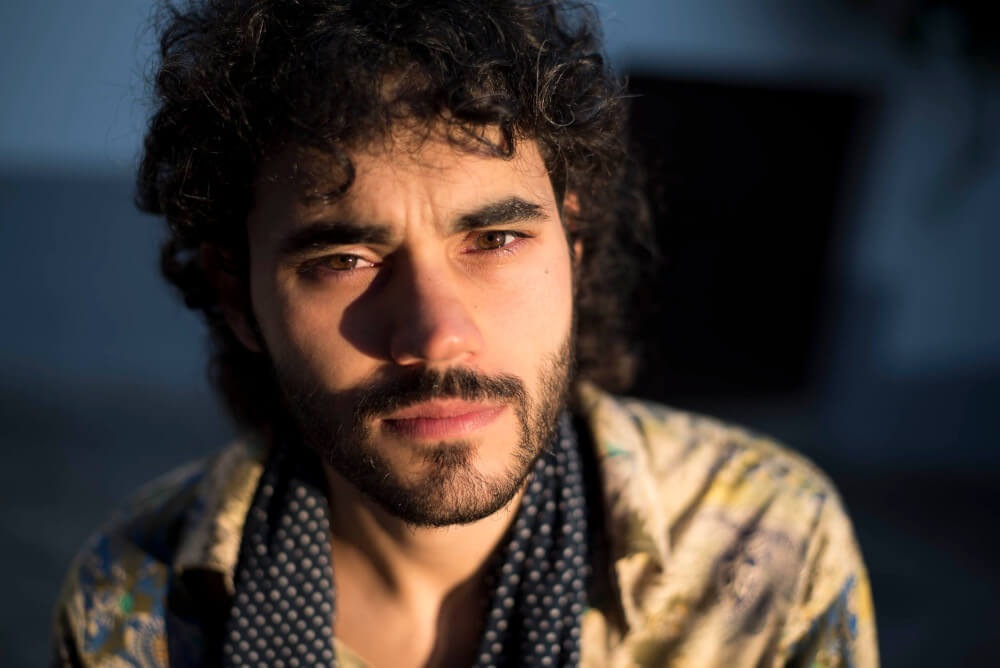
Investiga e publica, sobretudo, sobre a história legal e política da Espanha contemporânea. Actualmente, está a estudar as relações entre as práticas judiciais e o poder político no quadro do projecto de investigação “Constitutionalism and Justice: Bureaucracy, Army and Rule of Law during the Spanish Second Republic in Peace and War (1931-1939)“.
Áreas de Investigação
- História da justiça
- História constitucional
- História do pensamento político e legal
- História do colonialismo
Publicações destacadas
- Pérez Trujillano, Rubén. “Los nacionalismos en el banquillo: la represión de los movimientos nacionalistas y autonomistas durante la Segunda República,” Ayer 135 (2024): 159–185. [link] 🔓
- Pérez Trujillano, Rubén. “Las reformas judiciales del primer bienio republicano (1931-1933),” Historia Constitucional 25 (2024): 399-466. [link] 🔓
- Pérez Trujillano, Rubén. Jueces contra la República: el poder judicial frente a las reformas republicanas. Madrid: Editorial Dykinson / Universidad Carlos III de Madrid, 2024. [link] 🔓
- Pérez Trujillano, Rubén. Ruido de togas. Justicia política y polarización social durante la República (1931-1936). Valência: Tirant lo Blanch, 2024. [link]
Projectos principais
- Projecto individual “Constitutionalism and Justice: Continuities and Ruptures between Social Movements, Bureaucracy and Army during the Spanish Second Republic in Peace and War (1931-1939)” — Acolhido pelo IHC e financiado pela Fundação para a Ciência e Tecnologia (2022.08421.CEECIND). 2024-2030
- Projecto individual de pós-doutoramento “Interwar Constitutionalism, Labour Market and Justice: Continuities and Ruptures between Social Movements and Bureaucracy during the Spanish Second Republic (1931-1936)” — Acolhido e financiado pelo IHC, através de fundos da Fundação para a Ciência e Tecnologia (UIDB/04209/2020). 2021-2022
- Membro do grupo “Seminario Permanente de Estudios Contemporáneos” — Coordenado por Ángel Luis López Villaverde (Universidad de Castilla-La Mancha) e financiado pela Universidad de Castilla-La Mancha.

Pesquisa
Agenda
junho, 2026
Tipologia do Evento:
Todos
Todos
Apresentação
Ciclo
Colóquio
Conferência
Congresso
Curso
Debate
Encontro
Exposição
Inauguração
Jornadas
Lançamento
Mesa-redonda
Mostra
Open calls
Outros
Palestra
Roteiro
Seminário
Sessão de cinema
Simpósio
Workshop
- Event Name
seg
ter
qua
qui
sex
sab
dom
1
2
3
4
5
6
7
8
9
10
11
12
13
14
15
16
17
18
19
20
21
22
23
24
25
26
27
28
29
30

Detalhes do Evento
Conferência sobre as alterações nas vidas dos movimentos de independência, que visa explorar a evolução e transformação das lutas anticoloniais e anti-imperialistas. Prazo: 13 Fevereiro 2026 The Alter-lives of
Ver mais
Detalhes do Evento
Conferência sobre as alterações nas vidas dos movimentos de independência, que visa explorar a evolução e transformação das lutas anticoloniais e anti-imperialistas. Prazo: 13 Fevereiro 2026
The Alter-lives of Independence Movements:
Frustrated Hopes, Renewed Utopias
Decades after formal decolonisation, anti-colonialism and anti-imperialism have remained a wellspring of inspiration and contestation. Studies about anticolonial thought, the 1955 Bandung Conference, and transcontinental solidarity movements have proliferated in academia and activist networks, providing the basis of theories and practices of resistance in contemporary times. Nevertheless, the ideas and the movements they inspired did not perish with the epoch that produced them. They evolved and acquired alternative lives in the period of nation-building and world-making, whether in extended or distorted forms. On the one hand, there were local and transnational efforts to sustain and enrich the revolutionary impulse through embracing the anticolonial spirit in various areas such as development, education, and diplomacy. As international institutions such as the UN welcome additional member states, Europeans and non-Europeans travelled to decolonised states like Algeria and Angola to learn and further cultivate ideas in building new societies. On the other hand, some dominant groups that took over the independent states capitalised on the anti-colonial pride to justify authoritarian and anti-democratic rule. Their utopian visions led to the systematic oppression of opposing forces and reproduced the hierarchical international state model. The fear of neocolonialism and disillusionment propelled both the former coloniser and colonised to reorganise their strategies and desires in the face of an emerging world order.
This two-day conference on the alter-lives of independence movements explores the evolution and transformation of anti-colonial and anti-imperial struggles. It focuses on the events and reflections about the early years of independence, a period of turbulent transition from colonial domination to self-governing nation-states, and of tumultuous beginnings of a new international order. We introduce the concept “alter-lives” to denote the process of altering imaginaries and practices that emerged during the colonial period in responding to uncertain futures, including the political uses of anticolonial memories and/or histories. It also refers to alternative relations forged between and among the former colonisers and colonised after independence. Thus, using “alter-lives” as a conceptual ground, this conference engages in the following questions: first, how have anticolonial thinking and practices evolved domestically and transnationally? Second, what were the structural and agential forces behind these evolutions? Third, how were anticolonial memories and histories politicised to achieve certain ends? Fourth, what difficulties did these agents face in realising their envisioned future? Lastly, how have alterations and alternatives affirmed and/or challenged the revolutionary ideas of the independence struggles?
Call for papers
We welcome theoretical and praxis-oriented proposals to gather scholars, activists, and artists from various disciplinary backgrounds and acquire a broad comparative perspective. Possible
areas include, but are not limited to:
- Transnational solidarities and resistance, such as North-South and South-South cooperation
- Nation-building
- Anticolonial thought and figures
- Diplomacy and international affairs
- Pedagogy and knowledge transmission
- Literary and artistic representations, such as documentaries, films, and novels
- Rhetorics of failure, frustrated political projects
Please submit your abstract (300 words max.) by 13 February 2026 to jiw.hopesandfears@gmail.com.
Decisions will be communicated by the first week of March 2026.
>> Download the call for papers (PDF) <<
This event is organised as part of the Joint International Workshop “Hopes and Fears. Anti-colonial and Postcolonial Imaginaries in the Lusotopy and Beyond”, that gathers the Institute of Contemporary History — NOVA University Lisbon / University of Évora, the University of São Paulo, and the Pontifical Catholic University of Rio Grande do Sul.

Tempo
junho 25 (Quinta-feira) - 27 (Sábado)
Localização
Lisboa
Organizador
Instituto de História Contemporânea — NOVA FCSH, Universidade de São Paulo e a Pontifícia Universidade Católica do Rio Grande do Sul
Notícias
Marta Pinto Machado em dose dupla em Lisboa: MNAC e CCCV
Mai 14, 2026
A exposição “Ceci n’est Pas Francisco” está patente no MNAC e vai-se estender ao CCCV
Ainda há VINCULUM na Madeira
Mai 12, 2026
O “Tombo I da Igreja de Machico” vai ser o mote para uma série de eventos culturais
Nuno Silas expõe no MUHNAC
Abr 29, 2026
É um dos curadores da exposição “Olhares Críticos no Arquivo Colonial – Sombras e Memórias”