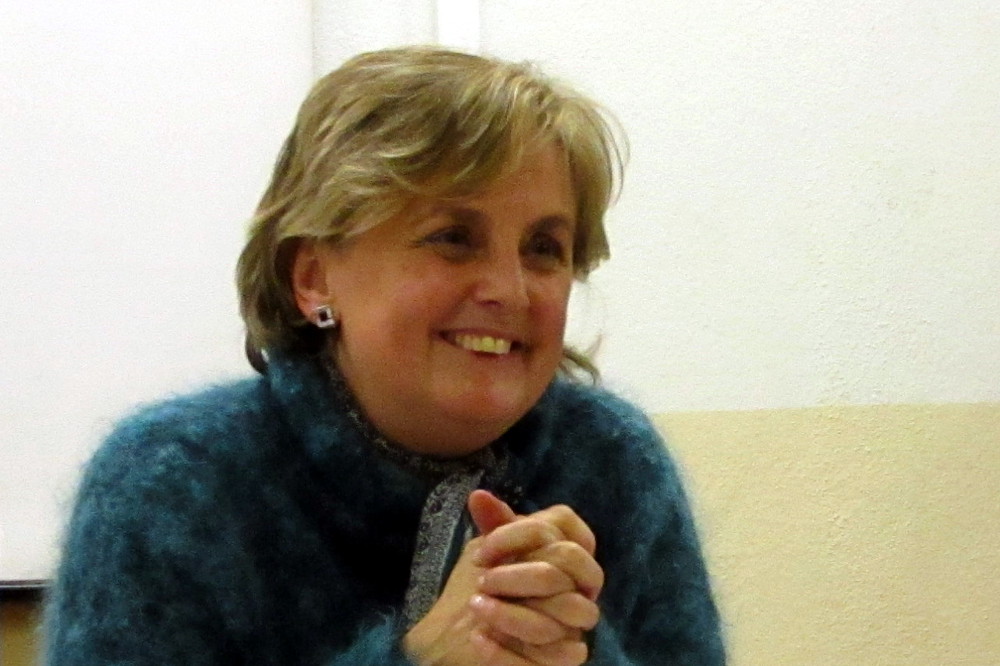
Paula Godinho
Economy and Society
Contact:
p.godinho@fcsh.unl.pt
Biography
PhD in Anthropology, IHC researcher, professor in the Department of Anthropology at NOVA FCSH. Xesús Taboada Chivite Award, 2008 (Galicia, Spain). Honorary Judge by the Asociación de Amigos do Couto Mixto, Galicia, 2011.
Several years of work in Portugal, on the border and in Galicia, on social reproduction, festivals and rituals, resistance and social movements, political uses of memory and heritage practices, processes of emblemisation, touristification, and commodification of culture, topographies of power, border cultures, and diaspora nationalisms. Among other works she published: Memórias da Resistência Rural no Sul (Couço, 1958-1962) [Memories of Rural Resistance in the South], Celta, 2001; O leito e as margens – Estratégias familiares de renovação e situações liminares no Alto Trás-os-Montes raiano [Renewal family strategies and liminal situations in the frontier of Alto Trás-os-Montes], Colibri, 2006; Festas de Inverno no Nordeste de Portugal – património, mercantilização e aporias da «cultura popular» [Winter festivals in Northeast Portugal], 100Luz, 2010; «Oír o galo cantar dúas veces» – Identificacións locais, culturas das marxes e construción de nacións na fronteira entre Portugal e Galicia [Local, cultural identification of the margins and nation building on the border between Portugal and Galicia], Imprenta Deputación Ourense, 2011; O futuro é para sempre – Experiência, expectativa e práticas possíveis [The future is forever – Experience, expectation and possible practices], Letra Livre and Via Editora, 2017.
She has organised and co-organised several works on Anthropology and Performance; Uses/practices of Memory and Heritage; masks; Associativism; Resistance and/y Memory; Borders. She curated the exhibition “Entre Margens – O Tratado de Limites de 1864 entre Portugal e Espanha” [Entre Margens – The 1864 Treaty of Limits between Portugal and Spain] at ANTT (2014-2015). Eight scientific projects funded, four international. Professor/lecturer at several foreign universities.
Research fields
- Topics and problems of Portuguese anthropology and the European ethnographic context
- Uses of culture and memory, heritage practices, and commodification of culture
- Ceremonies, commemorations, rituals, and performances
- Topographies of power, construction of national identities, border identities, border cultures, and diaspora nationalisms
- Rural social change, resistance, social movements, far left
Selected publications
- Godinho, Paula. O futuro é para sempre. Experiência, expectativa e práticas possíveis. Lisbon/Santiago de Compostela: Letra Livre/Através Editora, 2017. [link]
- Godinho, Paula. «Oír o galo cantar dúas veces» -Identificacións locais, culturas das marxes e construción de nacións na fronteira entre Portugal e Galicia. Ourense: Imprenta da Deputación, 2011. [PDF] Prémio Xésus Taboada Chivite 2008, Galiza
- Godinho, Paula. Festas de Inverno no Nordeste de Portugal – património, mercantilização e aporias da «cultura popular». Castro Verde: 100Luz, 2010. [PDF]
- Godinho, Paula. O Leito e as Margens. Estratégias familiares de renovação e situações liminares em seis aldeias do Alto Trás-os-Montes raiano (1880-1988). Lisbon: Edições Colibri, 2005. [link]
- Godinho, Paula. Memórias da resistência rural no Sul – Couço (1958-1962). Oeiras: Celta, 2001.
Main Projects
- Researcher in the project “Transiciones a la democracia en el sur de Europa y en América Latina: España, Portugal, Argentina y Chile” [Transitions to democracy in Southern Europe and Latin America: Spain, Portugal, Argentina, and Chile] — Coordinated by Carme Molinero and Pere Ysàs (Universitat Autònoma de Barcelona) and funded by the Spanish Ministry of Economy, Industry, and Competitiveness. 2016-2019 [HAR2015-63657-P]
- Researcher in the project “Los festivales y celebraciones musicales como factores de desarrollo socioeconomico y cultural en la Peninsula Iberica” [Festivals and musical celebrations as factors of socioeconomic and cultural development in the Iberian Peninsula] — Coordinated by Susana Moreno (Universidad de Valladolid) and funded by the Spanish Ministry of Economy, Industry, and Competitiveness. 2015-2017 [HAR2013-46160-P]
- Researcher in the project “Cooperación transfronteriza y (des)fronterización: actores y discursos geopolíticos transnacionales en la frontera hispano-portuguesa” [Cross-border cooperation and (de)borderization: actors and transnational geopolitical discourses on the Spanish-Portuguese border] — Coordinated by Heriberto Cairo Carou (Universidad Complutense de Madrid) and funded by the Spanish Ministry of Economy, Industry, and Competitiveness. 2013-2016 [CSO2012-34677]
- Researcher in the project “State and memory: memorial public policies on the Portuguese dictatorship (1974-2009)” — Coordinated by Manuel Loff and funded by the Foundation for Science and Technology (PTDC/HIS-HIS/121001/2010).