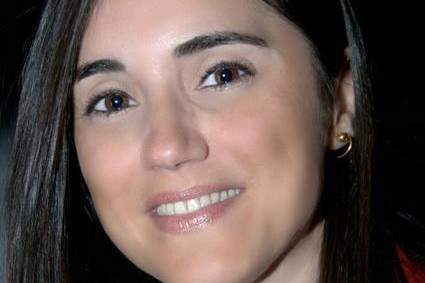
Patrícia Costa

Economia, Sociedade, Património e Inovação
Contacto:
patmotcost@gmail.com
DeGóis
Biografia
Museóloga no Museu do ISEP desde 1999, Patrícia Costa é licenciada em Ciências Históricas – Ramo Património pela Universidade Portucalense. Iniciou a sua especialização em 1998 com a Pós-graduação em Museologia na Faculdade de Letras da Universidade do Porto (FLUP). Em 2007, concluiu o mestrado, na mesma faculdade, onde abordou o tema dos museus no ensino industrial durante o séc. XIX. Doutorada em Geologia, especialidade História e Metodologia das Ciências Geológicas, na FCTUC, 2014. Desde Maio de 2013, é investigador integrado no Instituto de História Contemporânea da Universidade NOVA de Lisboa e professora afiliada na FLUP.
Áreas de Investigação
- História da ciência
- Museologia
- Ensino industrial
Publicações destacadas
- Alves, Luís Marques & Patrícia Costa, “Instituto Superior de Engenharia: um trajeto de ensino e de museologia educativa,” in Educação e Património Cultural. Escolas, Objectos e Práticas, coordenado por Maria João Mogarro, 291-307. Lisboa: Edições Colibri / Instituto de Educação – Universidade de Lisboa, 2015. [link]
- Costa, Patrícia Carla & José Carlos Barros de Oliveira, “O Museu do Instituto Superior de Engenharia do Porto: o ensino industrial e o saber fazer,” in Coleções científicas luso-brasileiras: patrimônio a ser descoberto, organizado por Marcus Granato e Marta C. Lourenço, 243-254. Rio de Janeiro: MAST, 2010.
- Costa, Patrícia Carla R. M., “Museu e o ensino industrial: o saber fazer,” in Colecções de ciências exactas em museus universitários: Homenagem ao Prof. Bragança Gil, 169-182. Porto: Faculdade de Letras da Universidade do Porto, 2005.
Projectos principais
- Representante do Museu do ISEP no “Thesaurus de Acervos Científicos em Língua Portuguesa” — Coordenado por Marta C. Lourenço (MUHNAC) e financiado pela Fundação para a Ciência e Tecnologia e pelo Conselho Nacional de Desenvolvimento Científico e Tecnológico (CNPq – Brasil). 2006-2013 [link]
Pesquisa
Agenda
abril, 2026
Tipologia do Evento:
Todos
Todos
Apresentação
Ciclo
Colóquio
Conferência
Congresso
Curso
Debate
Encontro
Exposição
Inauguração
Jornadas
Lançamento
Mesa-redonda
Mostra
Open calls
Outros
Palestra
Roteiro
Seminário
Sessão de cinema
Simpósio
Workshop
- Event Name
seg
ter
qua
qui
sex
sab
dom
-
-
1
2
3
4
5
6
7
8
9
10
11
12
13
14
15
16
17
18
19
20
21
22
23
24
25
26
27
28
29
30

Detalhes do Evento
O Grupo de Leitura RESONANCE é um encontro mensal da comunidade académica mais ampla do projeto RESONANCE, dedicado à reflexão sobre um texto ou livro importantes. RESONANCE Reading Group
Ver mais
Detalhes do Evento
O Grupo de Leitura RESONANCE é um encontro mensal da comunidade académica mais ampla do projeto RESONANCE, dedicado à reflexão sobre um texto ou livro importantes.
RESONANCE Reading Group
Session #4: Independent Music Theatre in Berlin, by Martina Stütz
The RESONANCE Reading Group is a monthly meeting that brings together members of the academic community, colleagues, friends, and enthusiasts of contemporary cultural history to reflect on and discuss a fundamental text or book. It is part of the project RESONANCE — Epistemologies for the Documentation of Affect and Becoming in Cultural Manifestations in Performance (1969-1979). This group meets in person at NOVA FCSH or online, during lunchtime on a weekday. Each participant brings their own lunch, and for in-person sessions, coffee and biscuits are kindly provided by the project.
The fourth session of the RESONANCE Reading Group focuses on the chapter “Independent Music Theatre in Berlin: Breaking Out of Traditional Discourses and Building New Structures,” by Martina Stütz. This chapter traces the development of independent musical-theatre in Berlin since the 1990s, drafting its ecologies of practice through forms of diversity and interdisciplinarity. It demonstrates some of the ways in which these nodes expand into the creation of production and collaboration networks, affirming musical theatre as a multimodal hybrid practice. In doing so, however, it expands this medium’s formal currency into paradox: how can such a capacious, vibrant, networked set of manifestations still be so scattered, fragmented, and invisible within institutional circuits? This reading group is going to be led by Filipa Magalhães (CESEM — NOVA FCSH / IN2PAST).
You can register by emailing Hélia Marçal at heliamarcal@fcsh.unl.pt, to receive an online meeting link and a PDF copy of the chapter.
More information about the RESONANCE project here.
This event is part of the RESONANCE’s Spring Seminar Series. Public events will also include the Seminar Performing the Archive, led by the curator and scholar Paula Parente Pinto, which will take place on the same day, April 29, at 6 PM, Auditorium B1 (Tower B), NOVA School of Social Sciences and Humanities.
Picture: Persimmon, axial view, MRI. Alexandr Khrapichev, University of Oxford. Source: Wellcome Collection, United Kingdom (CC BY)
The RESONANCE project is supported by the Programa Regional Lisboa 2030, Portugal 2030 and the European Union (LISBOA2030-FEDER-00914500). This work is also co-funded by national funds through FCT – Fundação para a Ciência e a Tecnologia, I.P., under the reference 2023.17624.ICDT (DOI: https://doi.org/10.54499/2023.17624.ICDT).
Tempo
(Quarta-feira) 12:30 pm - 2:00 pm
Organizador
Instituto de História Contemporânea, IHA, CESEM, ICNOVA e IFILNOVA — NOVA FCSH
Notícias
Pedro Cerdeira, Prémio Amílcar Cabral, em Lisboa
Abr 28, 2026
Participará no encontro “Desconstruir o Colonialismo: Entre Tradição e Revolução”
Fernando Rosas: o actor da história que estudou
Abr 23, 2026
“É muito importante tornar a história da democracia em Portugal muito presente”
Diogo Ramada Curto — In Memoriam
Abr 13, 2026
Nota de pesar da Direcção do IHC