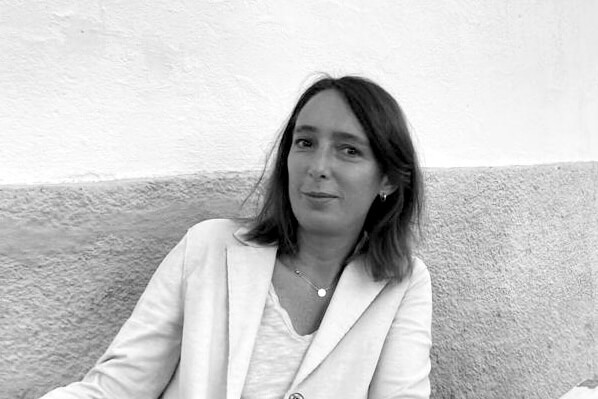
Sofia Victorino

Culture, Identities, and Power
Contact:
a2020123066@campus.fcsh.unl.pt
Biography
Scholarship holder from the Foundation for Science and Technology in the PhD Programm in History, specialization in Contemporary History, from NOVA FCSH. The thesis project investigates the relationship between decolonial thought, contemporary art, and cultural institutions. It focuses on a set of artistic practices that propose new ways of relating to politics of history and memory and that reflect ongoing social changes and transnational debates.
Between 2011 and 2021 she was Director of Education and Public Programs at the Whitechapel Gallery, London, taking on roles in terms of artistic programming, curatorship, community projects, schools and academic institutions; discursive and performative programs; strategic development and international collaborations. Previously, she was Coordinator of the Educational Service of the Serralves Foundation (2002-2011). She has taught at the Masters “Curating the Contemporary” (London Metropolitan University), “Contemporary Art and Education” (Goldsmiths, University of London), “Curating Art and Public Programs” (London South Bank University).
She is currently a member of the Advisory Board of the “Documents of Contemporary Art series”, co-edited by Whitechapel Gallery and MIT Press.
Research fields
- Contemporary art
- Curatorship
- Education
- Postcolonial studies
Selected publications
- Victorino, Sofia, “In a Moment of Tenderness the Future Seems Possible,” in Creating Dangerously: A Postscript to Sharjah Biennial 14, edited by Omar Kholeif. Sharjah: Sharjah Art Foundation, 2021. [link]
- Victorino, Sofia, “To Hold My Breath,” in Making New Time, Sharjah Biennial 14: Leaving the Echo Chamber, edited by Omar Kholeif, 253-256. Sharjah: Sharjah Art Foundation, 2019. [link]
- Victorino, Sofia, “Theaster Gates: Soul Manufacturing Corporation,” in New Materialism, edited by Magnus af Petersens and Caroline Elgh Klingborg. Stockholm: Art and Theory Publishing / Bonniers Konsthall, 2018. [link]
- Victorino, Sofia, “Por Uma Pedagogia do Afeto,” in O Nome do Medo, organised by Lisette Lagnado, 100-111. Rio de Janeiro: Museu de Arte do Rio, 2017. [PDF]
Main projects
- “The Contribution of Contemporary Artistic Practices to Decolonise Art Institutions” — PhD thesis to be presented to the NOVA School of Social Sciences and Humanities, supervised by Manuela Ribeiro Sanches and José Neves (IHC — NOVA FCSH). Individual PhD project funded by the Foundation for Science and Technology (UI/BD/151035/2021). 2021-

Search
Events
março, 2026
Tipologia do Evento:
Todos
Todos
Colloquium
Conference
Conference
Congress
Course
Cycle
Debate
Exhibition
Launch
Lecture
Meeting
Movie session
Open calls
Opening
Other
Presentation
Round table
Seminar
Showcase
Symposium
Tour
Workshop
- Event Name
seg
ter
qua
qui
sex
sab
dom
-
-
-
-
-
-
1
2
3
4
5
6
7
8
9
10
11
12
13
14
15
16
17
18
19
20
21
22
23
24
25
26
27
28
29
30
31

Detalhes do Evento
How do the machinery of war and political violence relate to the production of power relations and subjectivity that we generally refer to as authoritarianism? Wars, Violence, and Authoritarianism How
Ver mais
Detalhes do Evento
How do the machinery of war and political violence relate to the production of power relations and subjectivity that we generally refer to as authoritarianism?
Wars, Violence, and Authoritarianism
How do the machinery of war and political violence relate to the production of power relations and subjectivity that we generally refer to as authoritarianism? Professors Charalambos Minasidis (University of Yale) and Fernando Jiménez Herrera (Complutense University of Madrid) will share their reflections on this question, based on meticulous archival work that positions them as two of the leading experts on the Greek and Spanish dictatorships of the 20th century.
The workshop is part of the STEXEU project, coordinated by Arturo Zoffmann Rodriguez.
Programme:
11h-13h: From Discrimination to Genocide: Minorities as the “Enemy Within” during the Ottoman Long War, with Charalambos Minasidis (University of Yale)
16h-18h: Chekas, la violencia revolucionaria en el relato franquista sobre la guerra civil española, 1936-1977, with Fernando Jiménez Herrera (Complutense University of Madrid)
Tempo
(Terça-feira) 11:00 am - 6:00 pm
Organizador
Institute of Contemporary History — NOVA School of Social Sciences and Humanitiescomunicacao.ihc@fcsh.unl.pt Avenida de Berna, 26C - 1069-061 Lisbon

Detalhes do Evento
Round table discussion on clandestine meetings that took place in Lisbon during the Estado Novo regime and the underground currents that ran through the city dominated by the regime's dull
Ver mais
Detalhes do Evento
Round table discussion on clandestine meetings that took place in Lisbon during the Estado Novo regime and the underground currents that ran through the city dominated by the regime’s dull character — part of the cycle Lisbon, Capital of International Intrigue.
Encontros clandestinos na capital da espionagem:
As relações luso-alemãs em Lisboa entre as décadas de 1940 e 1970
Que encontros clandestinos ocorreram em Lisboa, capital da espionagem entre a Segunda Guerra Mundial até aos tempos de Guerra Fria? Que correntes subterrâneas atravessaram a cidade dominada pelo carácter baço do regime de Salazar, em diferentes domínios?
É sobre estes temas, mais ou menos secretos, mais ou menos clandestinos ou subterrâneos, que nos propomos conversar na Biblioteca do Goethe Institut, no próximo dia 10 de Março, pelas 18h30, numa sessão conduzida por Manuela Ribeiro Sanches. Fernando Clara começará por nos falar das tempestades que assolaram Lisboa em Maio de 1945, bem como das missas que foram mandadas rezar pelas almas dos dois ditadores depostos, ao mesmo tempo que se celebrava a vitória dos Aliados. Vera San Payo de Lemos lembrará a censura do teatro de Brecht e o boom subsequente das suas peças nos palcos da capital da espionagem depois do 25 de Abril. Jürgen Bock evocará a visita à Caparica de Hubert Fichte na década de 1960, escritor a quem a partilha do mundo clandestino da homossexualidade permitiu um acesso único ao Portugal dessa época.
ENTRADA LIVRE
Esta conversa será complementada, às 21h30, na Cinemateca Portuguesa, com a exibição do mais antigo thriller alemão rodado em Lisboa, Der weiße Dämon (1932), junto com um breve documentário da altura sobre esta produção, intitulado A UFA em Lisboa, parte do ciclo de cinema Lisboa, Capital da Intriga Internacional.
>> Consulte o programa completo do ciclo AQUI (PDF)
[Os horários das projecções podem sofrer alterações. Confirme sempre no site da Cinemateca]
O ciclo Lisboa, Capital da Intriga Internacional resulta de uma colaboração entre a Cinemateca Portuguesa, o Instituto de História Contemporânea (IHC) e o projecto ExPORT (baseado no Instituto de Ciências Sociais da Universidade de Lisboa), com apoio da Fundação Luso-Americana para o Desenvolvimento, do Istituto Italiano di Cultura di Lisbona, do Institut français du Portugal, do Instituto Cervantes de Lisboa e da Faculdade de Ciências Sociais e Humanas da Universidade NOVA de Lisboa.
Tempo
(Terça-feira) 6:30 pm - 8:00 pm
Organizador
Institut of Contemporary History — NOVA School of Social Sciences and Humanities and the Goethe Institut
News
VINCULUM — An end and a new beginning
Feb 24, 2026
FCSH hosted the closing session of the VINCULUM project
In March, Lisbon becomes the Capital of International Intrigue
Feb 21, 2026
Between 2 and 31 March, at the Portuguese Cinematheque
Anita Buhin is on a research mission in Italy
Feb 20, 2026
She is now a Visiting Researcher at CAST, University of Bologna
CONTACTS
WORKING HOURS