Fabio Calè

Political History — Regimes, Transitions, and Memory
Contact:
fcw1973@gmail.com
Biography
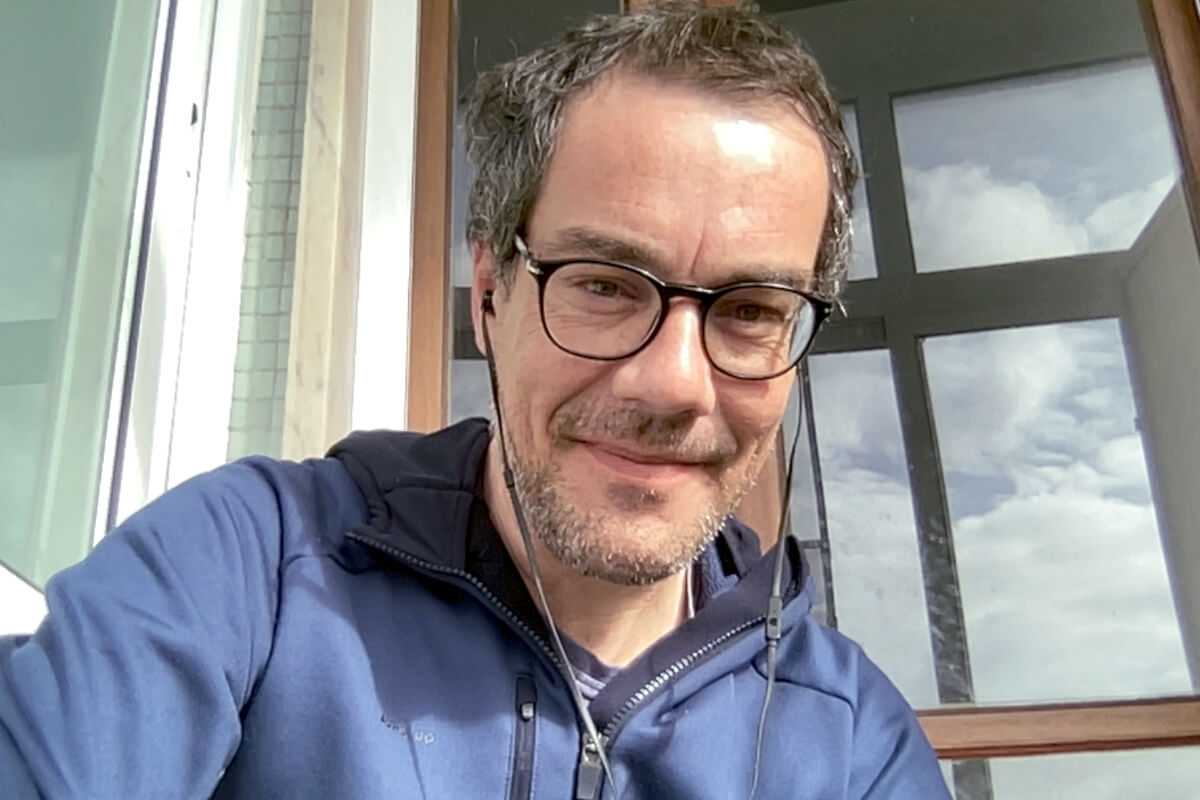
Fabio Calè graduated with a master’s degree in Contemporary History from La Sapienza University of Rome, with a dissertation on fascism, within the research line of political aesthetics, under the supervision of Bruno Tobia. He worked for years as a political analyst and curator of cultural events, exhibitions and publications related to the memory of the Italian Communist Party.
In 2011, he published Popolo in festa (Donzelli), a book+DVD on the history of the Festa de l’Unità, intersecting historical reconstruction based on archival documents with wide-ranging interviews with militants, organisers, artists, intellectuals and party leaders. In 2012, he coordinated a multimedial exhibition documenting the 1944 Nazi raid and mass deportations in Quadraro, a Roman suburb, in collaboration with the Gramsci Foundation. Between 2013 and 2018, he was employed by the Italian Senate as personal secretary to the Chair of the CQIE (Italians Living Abroad Committee).
Since 2022, he has been working on a project on the political culture of communists in Italy, Portugal and Spain, focusing mainly on the comparative analysis of communist festivals. Since 2023, he is a PhD student with an FCT scholarship at the IHC, NOVA University Lisbon.
Research fields
- Political culture
- Comparative history
- Oral history
- Migration studies
Selected publications
- Costantini, Eleonora, Fabrizio Patriarca & Fabio Calè (Eds.). Vado. Voy a volver o me quedo? Le biografie migratorie degli Emiliano-Romagnoli nella Comunità di Madrid. Milan: FrancoAngeli, 2024. [link] 🔓
- Calè, Fabio, “El submarino rojo. La URSS en el imaginario colectivo español (1982-1985),” in Imaginando la guerra fria desde los margenes. La sociedad española y la OTAN (1975-1986), editado por Giulia Quaggio e Sergio Molina, 23-41. Granada: Comares, 2023. [link]
- Calè, Fabio. Popolo in festa. Sessant’anni di feste dell’Unità. Roma: Donzelli Editore, 2011. [link]
Main projects
- “Low Tide. The Soviet Myth in Southern Europe between 1975 and 1991: the Collective Imaginary and Self-representation of Communists in Italy, Spain and Portugal” — PhD thesis to be presented to the NOVA School of Social Sciences and Humanities, supervised by Giulia Strippoli e Arturo Zoffmann Rodriguez (IHC — NOVA FCSH). Individual PhD project funded by the Foundation for Science and Technology (2022.14702.BD). 2023-
Search
Events
junho, 2026
Tipologia do Evento:
Todos
Todos
Colloquium
Conference
Conference
Congress
Course
Cycle
Debate
Exhibition
Launch
Lecture
Meeting
Movie session
Open calls
Opening
Other
Presentation
Round table
Seminar
Showcase
Symposium
Tour
Workshop
- Event Name
seg
ter
qua
qui
sex
sab
dom
1
2
3
4
5
6
7
8
9
10
11
12
13
14
15
16
17
18
19
20
21
22
23
24
25
26
27
28
29
30

Detalhes do Evento
Three-day conference on the alter-lives of independence movements that explores the evolution and transformation of anti-colonial and anti-imperial struggles. The Alter-lives of Independence Movements: Frustrated Hopes, Renewed Utopias Decades
Ver mais
Detalhes do Evento
Three-day conference on the alter-lives of independence movements that explores the evolution and transformation of anti-colonial and anti-imperial struggles.
The Alter-lives of Independence Movements:
Frustrated Hopes, Renewed Utopias
Decades after formal decolonisation, anti-colonialism and anti-imperialism have remained a wellspring of inspiration and contestation. Studies about anticolonial thought, the 1955 Bandung Conference, and transcontinental solidarity movements have proliferated in academia and activist networks, providing the basis of theories and practices of resistance in contemporary times. Nevertheless, the ideas and the movements they inspired did not perish with the epoch that produced them. They evolved and acquired alternative lives in the period of nation-building and world-making, whether in extended or distorted forms. On the one hand, there were local and transnational efforts to sustain and enrich the revolutionary impulse through embracing the anticolonial spirit in various areas such as development, education, and diplomacy. As international institutions such as the UN welcome additional member states, Europeans and non-Europeans travelled to decolonised states like Algeria and Angola to learn
and further cultivate ideas in building new societies. On the other hand, some dominant groups that took over the independent states capitalised on the anti-colonial pride to justify authoritarian and anti-democratic rule. Their utopian visions led to the systematic oppression of opposing forces and to the reproduction of the hierarchical international state model. The fear of neocolonialism and disillusionment propelled both the former coloniser and colonised to reorganise their strategies and desires in the face of an emerging world order.
This conference on the alter-lives of independence movements explores the evolution and transformation of anti-colonial and anti-imperial struggles. It focuses on events and reflections on the early years of independence, a period of turbulent transition from colonial domination to
self-governing nation-states and the tumultuous beginnings of a new international order. We introduce the concept “alter-lives” to denote the process of altering imaginaries and practices that emerged during the colonial period in responding to uncertain futures, including the
political uses of anticolonial memories and/or histories. It also refers to alternative relations forged between former colonisers and colonised after independence. Thus, using “alter-lives” as a conceptual ground, this conference engages in the following questions: first, how have
anticolonial thinking and practices evolved domestically and transnationally? Second, what were the structural and agential forces behind these evolutions? Third, how were anticolonial memories and histories politicised to achieve certain ends? Fourth, what difficulties did these
agents face in realising their envisioned future? Lastly, how have alterations and alternatives affirmed and/or challenged the revolutionary ideas of the independence struggles?
>> Download the full programme (PDF) <<
Contact:
If you need more information on the conference, please send an email to jiw.hopesandfears@gmail.com.
This event is organised as part of the Joint International Workshop “Hopes and Fears. Anti-colonial and Postcolonial Imaginaries in the Lusotopy and Beyond”, that gathers the Institute of Contemporary History — NOVA University Lisbon / University of Évora, the University of São Paulo, and the Pontifical Catholic University of Rio Grande do Sul.

Tempo
junho 25 (Quinta-feira) - 27 (Sábado)
Localização
Lisbon, Portugal
Organizador
Institute of Contemporary History — NOVA FCSH, University of São Paulo, and Pontifical Catholic University of Rio Grande do Sul
News
Marta Pinto Machado in a double bill in Lisbon: MNAC and CCCV
May 14, 2026
“Ceci n’est Pas Francisco” is at MNAC and will extend to CCCV
VINCULUM is still going in Madeira
May 12, 2026
The Inscription I of the Church of Machico will serve as the theme for a series of cultural events
Nuno Silas is exhibiting at MUHNAC
Apr 29, 2026
He is one of the curators of the exhibition “Olhares Críticos no Arquivo Colonial – Sombras e Memórias”