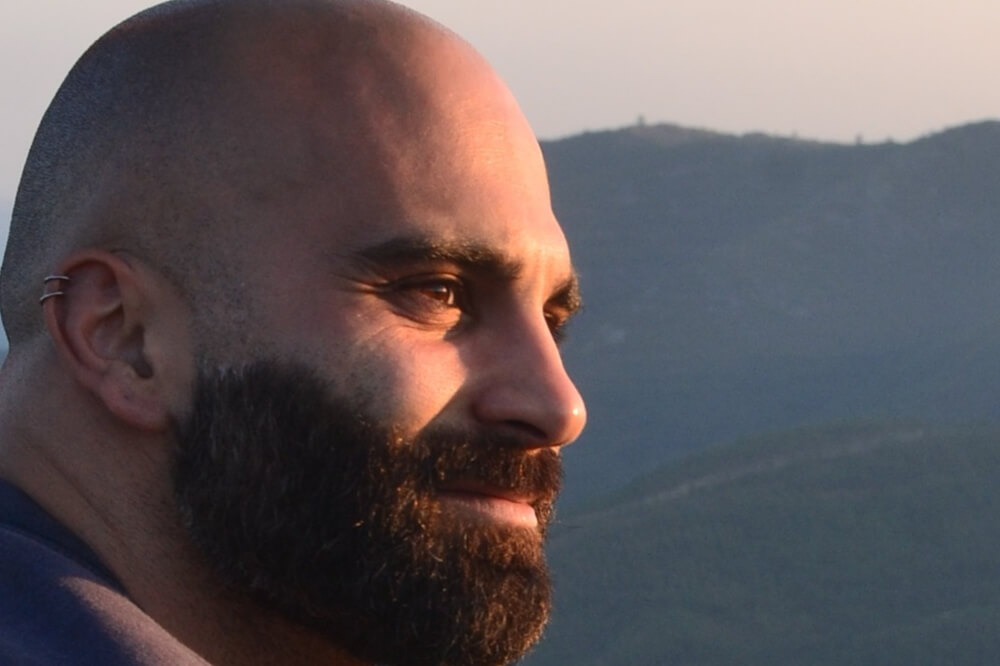
Diogo Sobral

Economy and Society — State, Classes, and Gender
Contact:
a2022116910@campus.fcsh.unl.pt
Biography
I graduated in Languages, Literatures, and Cultures at FLUL. I decided to change fields for my master’s degree, so I attended and completed the Anthropology course at Iscte-IUL. I am currently a PhD student in Anthropology at FCSH. My doctoral research focuses on the relationship between the population of Covas do Barroso and the Barroso Mine project and the forms of agency that it activates. I am interested in researching the Energy Transition conceived ‘from below’, for example by popular movements affected by megaprojects allegedly associated with national decarbonisation processes. I have focused my research on temporal analysis, studying not only the popular ecologies of the affected villages but also their temporalities, and how they may or may not be axes of friction with the mine project. In particular, inspired by the theoretical arc of the Anthropology of the Future, I seek to understand the role of future projections in the constitution of the present subjectivities of the villages.
Research fields
- Political ecology
- Anthropology of time
- Energy transition
- Extractivism
Selected publications
—
Main projects
- ‘Um Projecto de Mina em Covas do Barroso: Discursividade, Recepções e Resistências’ [A Mining Project in Covas do Barroso: Discourse, Receptions, and Resistance] — PhD thesis to be presented to the NOVA School of Social Sciences and Humanities, supervised by Paula Godinho (IHC — NOVA FCSH). Individual PhD project funded by the Foundation for Science and Technology (2023.01280.BD). 2023-
- Researcher of the project ‘EPopE — L’écologisation du monde par le bas : penser les écologies populaires du sud au nord de l’Europe’ — Coordinated by Doris Buu-Sao (CERAPS — Université de Lille) and funded by CNRS (France).

Search
Events
maio, 2026
Tipologia do Evento:
Todos
Todos
Colloquium
Conference
Conference
Congress
Course
Cycle
Debate
Exhibition
Launch
Lecture
Meeting
Movie session
Open calls
Opening
Other
Presentation
Round table
Seminar
Showcase
Symposium
Tour
Workshop
- Event Name
seg
ter
qua
qui
sex
sab
dom
-
-
-
-
1
2
3
4
5
6
7
8
9
10
11
12
13
14
15
16
17
18
19
20
21
22
23
24
25
26
27
28
29
30
31

Detalhes do Evento
A conference aimed at exploring the potential of the intersection between the social sciences and literature, through a literary work and its role in interpreting social processes. Literatura e
Ver mais
Detalhes do Evento
A conference aimed at exploring the potential of the intersection between the social sciences and literature, through a literary work and its role in interpreting social processes.
Literatura e Sociedade
As ciências sociais podem ser literárias, propôs Ivan Jablonka, com o derrubamento da fronteira entre a literatura e a História. Para explorar essa relação feliz, convidámos um conjunto de pesquisadores/as a examinar as potencialidades do encontro entre as ciências sociais e a literatura, através de uma obra literária, escolhida pelos participantes, e do seu papel na leitura dos processos sociais. A etnografia, a história, a sociologia, a ciência política, os estudos culturais, contribuem com factos e conceitos, a literatura trabalha-os pela escrita, para ultrapassar as fronteiras entre o íntimo e subjetivo, os temas graves e colectivos, os acontecimentos, as sociedades, as instituições, as resistências e os movimentos sociais. Como recordava Maurice Godelier, a ficção contém mais do que o imaginado e imaginário, porque ajusta ao suporte de um livro vários componentes dos mundos, reais e irreais, com personagens, acontecimentos, símbolos, conferindo legibilidade às sociedades e suas dimensões. Quer o passado, cujo conhecimento resulta do trabalho sobre fontes de diversa etiologia, que abrem o campo das possibilidades do conhecimento, quer os futuros em disputa, de modo prospectivo, confrontam quem investiga com campos de possibilidades. Seja pela base documental, seja pelo encadeamento causal, a literatura não é só um mundo de seres imaginários, oposto ao mundo da realidade efectiva. Com Jacques Rancière, consideramos que a ficção é uma estrutura de racionalidade que permite comparar traços esparsos na construção de situações e de personagens identificáveis, designar acontecimentos, estabelecer ligações entre esses acontecimentos e dar-lhes um sentido. É dessa matéria que partimos nesta conferência.
Organização:
Maria Alice Samara (IHC — NOVA FCSH / IN2PAST)
Débora Dias (CHAM — NOVA FCSH)
Elena Freire (USC)
Paula Godinho (IHC — NOVA FCSH / IN2PAST)
Locais:
Biblioteca Nacional de Portugal, Lisboa
Casa da Achada — Centro Mário Dionísio, Lisboa
Museu do Neo-Realismo, Vila Franca de Xira
Tempo
14 (Quinta-feira) 9:30 am - 16 (Sábado) 5:00 pm
Localização
Several locations
Organizador
Institute of Contemporary History and CHAM - Centre for the Humanities, NOVA FCSH, Universidade NOVA de Lisboa
News
Marta Pinto Machado in a double bill in Lisbon: MNAC and CCCV
May 14, 2026
“Ceci n’est Pas Francisco” is at MNAC and will extend to CCCV
VINCULUM is still going in Madeira
May 12, 2026
The Inscription I of the Church of Machico will serve as the theme for a series of cultural events
Nuno Silas is exhibiting at MUHNAC
Apr 29, 2026
He is one of the curators of the exhibition “Olhares Críticos no Arquivo Colonial – Sombras e Memórias”