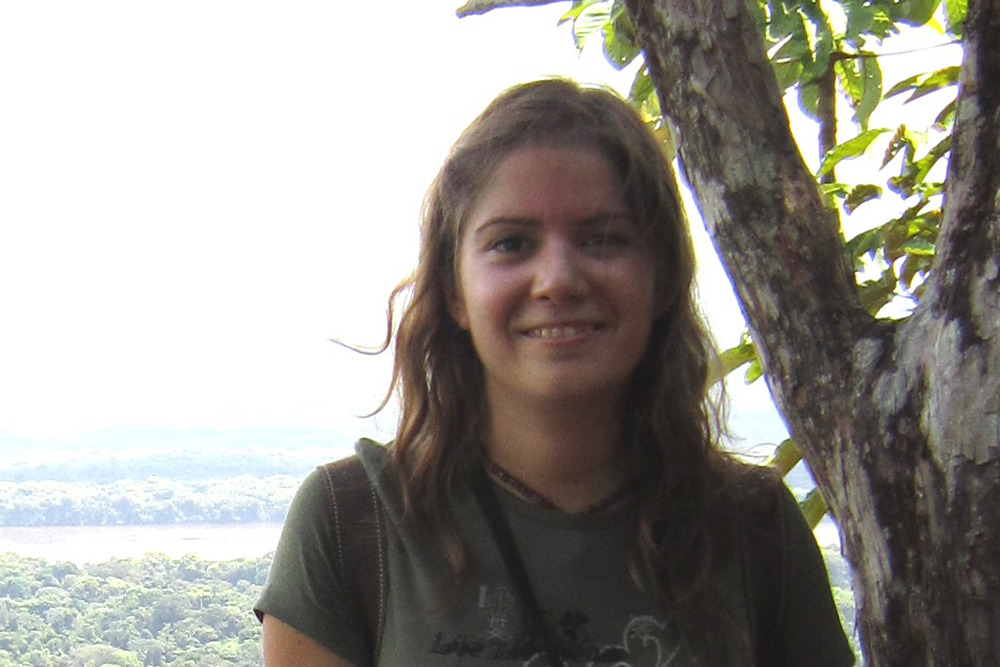
Sara Albuquerque

Science: Studies of History, Philosophy, and Scientific Culture
Contact:
sma@uevora.pt
Biography
Sara Albuquerque completed her PhD in History of Science at the University of London in 2013. She is currently a researcher at the IHC — University of Évora. She previously worked, as a researcher, at the Natural History Museum in London and the Royal Botanic Gardens Kew. She has received two awards, an honor (Honorary Research Associate, Kew) and is a fellow of the Linnean Society of London.
She works in the areas of natural sciences and humanities, with particular interests in: history of science, natural history collections, museology, material culture, botany, ethnobotany, economic botany, networks of knowledge, and cross-cultural encounters.
Research fields
- History of science
- Natural history colections
- Material culture
- Ethnobotany
Selected publications
- Albuquerque, Sara. “Glimpses of British Guiana at the Colonial and Indian Exhibition, 1886,” Culture & History Digital Journal 5 (2016): e010. DOI: http://dx.doi.org/10.3989/chdj.2016.010 [PDF]
- Albuquerque, Sara. ““Flower of Aristolochia gigas var. sturtevantii used as a hat by a native of British Guiana” – a photograph from Everard im Thurn at the Royal Botanic Gardens, Kew,” Archives of Natural History 42 (2015): 355-356. [PDF]
- Albuquerque, Sara. “Watercolours of orchids native to British Guiana at the Royal Botanic Gardens, Kew, attributed to Hannah Cassels im Thurn (1854–1947),” Archives of Natural History 39 (2012): 344-347. [PDF]
- Albuquerque, Sara, R. K. Brummitt & Estrela Figueiredo. “Typification of Names Based on the Angolan Collections of Friedrich Welwitsch,” Taxon 58 (2009): 641-646. [link]
Main projects
- Coordinator of the project “KNOWledge networks in 19th century AFRICA: A Digital Humanities approach to colonial encounters and local knowledge in the narratives of Portuguese expeditions (1853-1888)” — Hosted by the IHC — University of Évora and funded by the Foundation for Science and Technology (2022.01599.PTDC).
- “Botanical Exchanges and Networks of Knowledge: Friedrich Welwitsch’s African Expedition – Iter Angolense (1853 – 1860)” — Individual postdoctoral project funded by the Foundation for Science and Technology (SFRH/BPD/108236/2015) and supervised by Maria de Fátima Nunes. [link]
- “Cross-Cultural Histories of Tropical Botany in Latin America” — PhD thesis presented at the University of London, supervised by Luciana Martins (Birkbeck, University of London) and Christopher Mills (Royal Botanic Gardens, Kew). Individual PhD project funded by the Foundation for Science and Technology and the Arts and Humanities Research Council (UK). [link]
- Researcher in the field project “Living objects, beyond Museum walls – Field trip do Guyana, South America” — Coordinated by Luciana Martins (Birkbeck, University of London) and funded by the Arts and Humanities Research Council (UK). 2016-2019 [CDA 08/329]
Search
Events
maio, 2026
Tipologia do Evento:
Todos
Todos
Colloquium
Conference
Conference
Congress
Course
Cycle
Debate
Exhibition
Launch
Lecture
Meeting
Movie session
Open calls
Opening
Other
Presentation
Round table
Seminar
Showcase
Symposium
Tour
Workshop
- Event Name
seg
ter
qua
qui
sex
sab
dom
-
-
-
-
1
2
3
4
5
6
7
8
9
10
11
12
13
14
15
16
17
18
19
20
21
22
23
24
25
26
27
28
29
30
31

Detalhes do Evento
Research seminar that seeks to expand the field of oil studies beyond established narratives, geographies, and disciplinary boundaries, amplifying perspectives from the Global South and other sites of extraction and
Ver mais
Detalhes do Evento
Research seminar that seeks to expand the field of oil studies beyond established narratives, geographies, and disciplinary boundaries, amplifying perspectives from the Global South and other sites of extraction and resistance.
Mind the Gap III:
Unearthing Petromodernity: Oil Studies in the Anthropocene
Online Research Seminar
The rise of fossil fuels has been central to the political, economic, cultural, and material transformations of the past two centuries, yet the forms of power, knowledge, and life enabled by carbon energy often remain analytically invisible. As we confront the converging crises of the Anthropocene, the need to rethink the centrality of fossil fuels to modern life has never been more urgent.
At a moment when toxic landscapes, resource frontiers, and environmental inequality reveal the uneven geographies of fossil modernity, the humanities and social sciences are reorienting analytical attention toward the energetic foundations of modern life. From pipelines and refineries to plastics and everyday petrochemical products, the material properties of oil have fundamentally shaped modern infrastructures and forms of life. What forms of political and social power are created through fossil fuel industries? How have fossil fuels shaped modern societies, their economic models, governmental regimes, everyday lives? How have they contributed to uneven global geographies rooted in colonialism and capitalism? What kinds of transitions to post-carbon futures are possible?
Bringing together approaches from history, anthropology, political ecology, and geography, we seek to expand the field of oil studies beyond established narratives, geographies, and disciplinary boundaries, amplifying perspectives from the Global South and other sites of extraction and resistance.
📎 Download full programme (PDF)
Programme:
Every fortnight we will meet online to discuss an article or book chapter circulated in advance. The sessions will start with a 20–30 minute presentation, followed by discussion. The sessions will take place on Mondays at 2PM.
We will explore key concepts such as petro-culture, carbon democracy, extractivism, fossil capital, energy regimes, and transition imaginaries, examining how energy dependence shapes modern subjectivities, infrastructures, economies, and ecological futures. The texts will be shared with participants in advance.
Everyone is welcome.
To register, please fill out the online form. After registering you will receive the readings and access information ahead of each session.
For more information, please write to unearthingpetromodernity@proton.me.
30 March | Timothy Mitchell, Carbon Democracy: Political Power in the Age of Oil. Selected chapter TBA (Verso, 2011)
Davide Scarso (CIUHCT — FCT NOVA)
Focus: How fossil fuels structured democratic politics, labour power and modern governance
13 April | Adam Hanieh, “Petrochemical Empire: The Geo-Politics of Fossil-Fuelled Production“ New Left Review (139)
Ricardo Noronha (IHC — NOVA FCSH / IN2PAST)
Focus: Global production networks, the Gulf region and the restructuring of capitalism through petrochemicals
27 April | Carola Hein (ed.), Oil Spaces: Exploring the Global Petroleumscape. Chapter 8: Peyerl, D. “Building Brazil’s Petroleumscape on Land and Sea: Infrastructure, Expertise, and Technology” (Routledge, 2022)
Henrique Oliveira (IHC — NOVA FCSH / IN2PAST)
Focus: Infrastructure, territorial development and the spatial materiality of oil
11 May | Stephanie LeMenager, Living Oil: Petroleum Culture in the American Century. Selected chapter TBA (Oxford University Pres, 2014)
Raquel Ribeiro (CHAM — NOVA FCSH)
Focus: Oil, media, culture, and everyday life in twentieth-century society
25 May | Appel, Mason & Watts (Eds.), Subterranean Estates: Life Worlds of Oil and Gas. Introduction: “Oil Talk” (Cornell University Press, 2015)
Amedeo Policante (IHC — NOVA FCSH / IN2PAST)
Focus: Anthropological and political-economic perspectives on oil extraction and everyday life
8 June | Alice Mah, Petrochemical Planet: Multiscalar Battles of Industrial Transformation. Chapter 2: “Enduring Toxic Injustice and Fenceline Mobilizations” (Duke University Press, 2023)
João Pedro Santos (IHC — NOVA FCSH / IN2PAST)
Focus: Environmental justice, pollution, and grassroots activism around petrochemical industries
22 June | Chelsea Schields, Offshore Attachments: Oil and Intimacy in the Caribbean. Introduction and Chapter 1. “Crude Bargains” (University of California Press, 2023)
Anita Buhin (IHC — NOVA FCSH / IN2PAST)
Focus: Oil economies, intimacy, and social relations in offshore extraction zones
6 July | Tim Di Muzio & Matt Dow, “Global capitalism and oil“ in Handbook on Oil and International Relations (Edward Elgar Publishing , 2022)
Davide Scarso (CIUHCT — FCT NOVA), Amedeo Policante & Ricardo Noronha (IHC — NOVA FCSH / IN2PAST)
Focus: Oil in international relations, financialization and the structure of global capitalism
Organisation:
Davide Scarso (CIUHCT — FCT NOVA)
Amedeo Policante (IHC — NOVA FCSH / IN2PAST)
Ricardo Noronha (IHC — NOVA FCSH / IN2PAST)
Tempo
(Segunda-feira) 2:00 pm - 4:00 pm
Localização
Link to be provided to registered participants
Zoom
Organizador
Institute of Contemporary History — NOVA School of Social Sciences and Humanities and Interuniversity Center for the History of Science and Technology
News
Nuno Silas is exhibiting at MUHNAC
Apr 29, 2026
He is one of the curators of the exhibition “Olhares Críticos no Arquivo Colonial – Sombras e Memórias”
Pedro Cerdeira, winner of the Amílcar Cabral Prize, in Lisbon
Apr 28, 2026
He will take part in the event ‘Desconstruir o Colonialismo: Entre Tradição e Revolução’
Fernando Rosas: an actor in the history he studied
Apr 23, 2026
‘It is very important to keep the history of democracy in Portugal very much in the public consciousness’
CONTACTS
WORKING HOURS