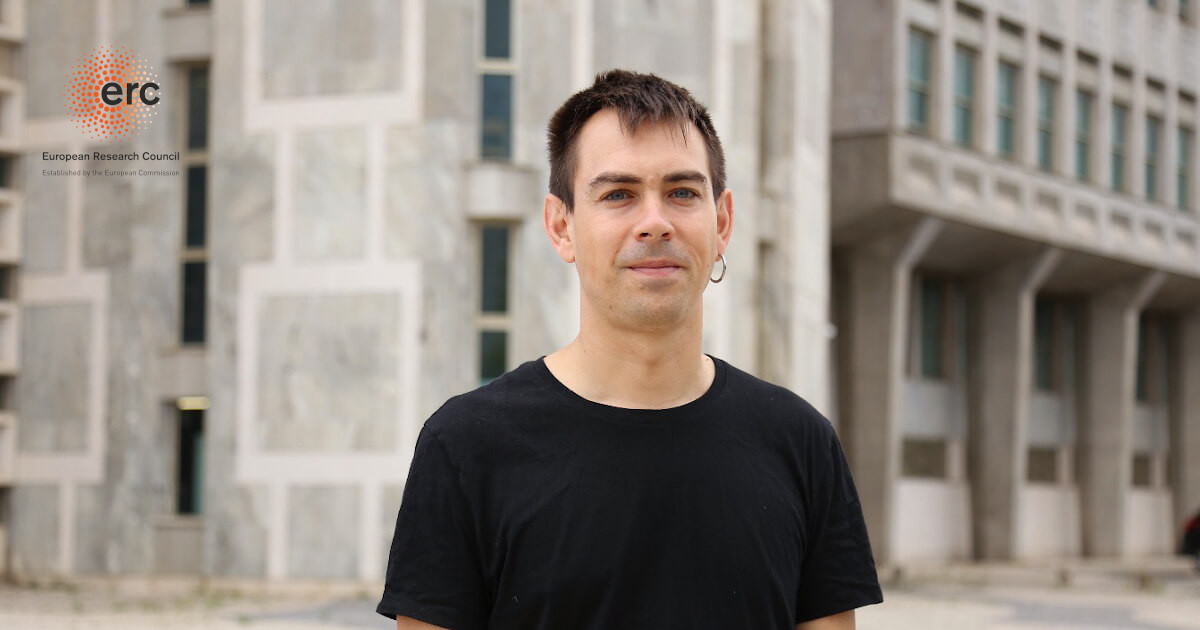
Arturo Zoffmann Rodriguez has received a Starting Grant from the European Research Council to begin an ambitious five-year project in which he will make a comparative history of the impact of states of exception on European democracies at the beginning of the 20th century.
In the first decades of the last century, faced with pressure on democratic regimes and challenges to State authority (such as during the Great War), many countries suspended their constitutional rules through states of exception and emergency powers. Were these legal instruments a factor in the emergence of the European dictatorships of the 20th century? This is the question Zoffmann sets out to answer with the project ‘The Constitutional Road to Dictatorship: States of Exception and Authoritarianism in Europe, 1900-1939’ (STEXEU), which will analyse and compare the history of eight European countries: Spain, Portugal, Italy, Germany, Czechoslovakia, France, Great Britain, and Greece.
For Zoffmann, the research he has carried out so far has culminated in this project which ‘is a success, both for my research and for the IHC’ and which will allow him to ‘carry out much more ambitious research’ than he has done so far. STEXEU’s research line is ‘essentially new’, but it has many links to his previous work. His previous research into ‘enemies of the state (communists, anarchists, nationalists, etc.)’ gave him ‘a very complex view of how repression worked, and how state violence often circumvented, distorted or even ignored the legal framework in place’. So the IHC historian is now going to study ‘the state itself and its repressive apparatus’.
Inspired by legal studies, the STEXEU project will use the voluminous legal literature on states of exception to provide a historical framework, with the aim of shedding ‘new light on the history of democracy and dictatorship, exploring the disregarded constitutional origins of authoritarianism that emerged from the bosom of the liberal regimes themselves’. It’s the first time that this subject will be studied from this perspective, with a project that crosses several disciplines, from history to political science, including legal studies. It also has clear links with ‘contemporary anxieties, such as the rise of illiberal democracies’.
The project will receive 1.5 million euros, in a competition where funding was awarded to 494 Starting Grants, totalling 780 million euros. In Portugal, five projects were successful, with STEXEU being the only one from NOVA University Lisbon.
Photo: © NOVA FCSH
Other news
-
 Under the theme ‘The Public History of Difficult Pasts’
 -
 "Ceci n’est Pas Francisco" is at MNAC and will extend to CCCV